As reported on November 24, 2026, several crypto projects and services had set withdrawal or shutdown deadlines before year-end. The important distinction for users was not simply when a service would close, but who controlled the assets and what withdrawal route would remain afterward. The reported changes spanned an exchange, Ethereum-connected networks, wallets and protocols; they were not a single Ethereum upgrade.
Deadlines and routes
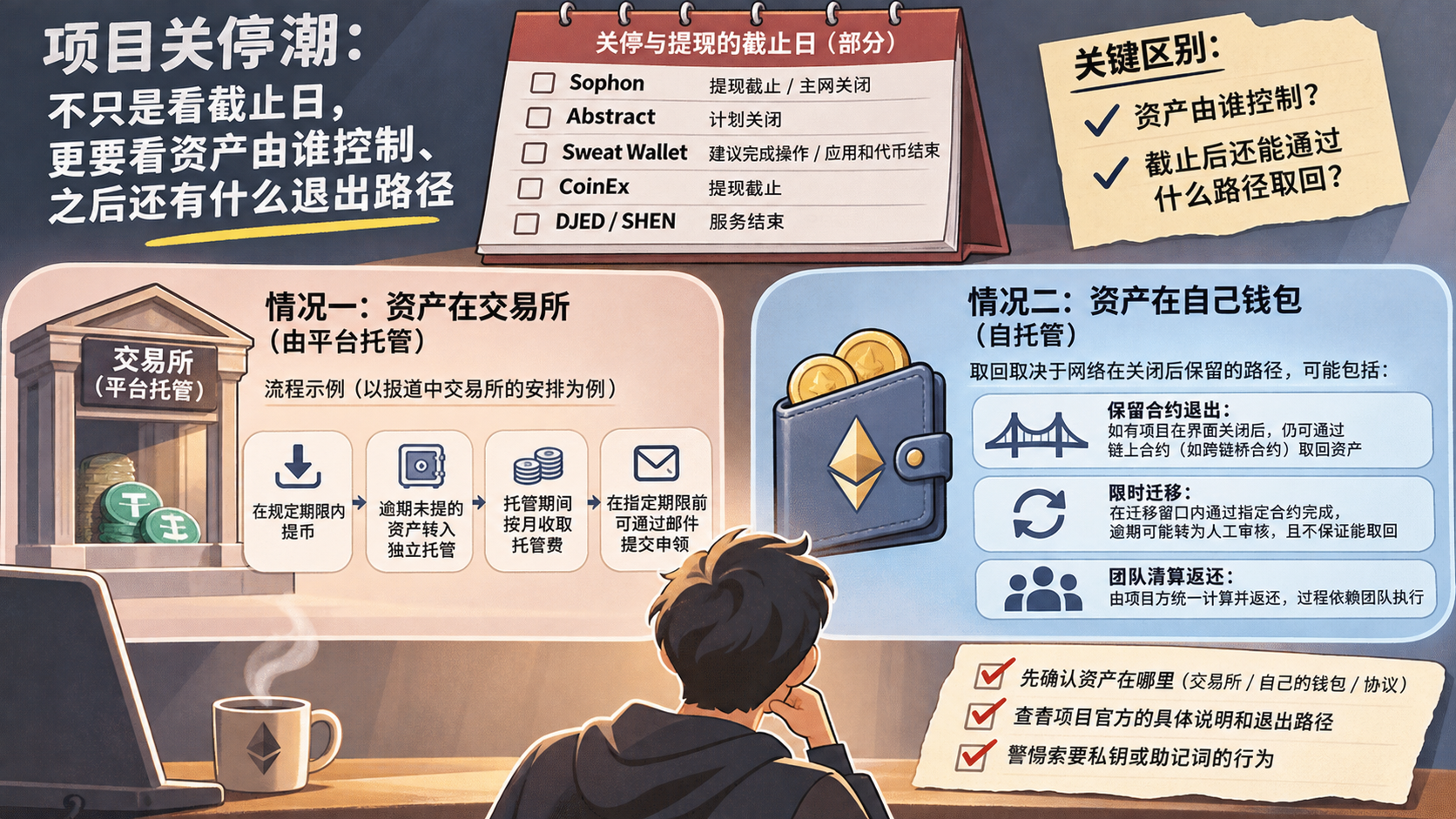
Sophon’s withdrawal deadline was listed as November 25, with its mainnet due to close on November 30. Citing crypto.news, the report said its bridge, node services and official frontend would begin going offline from November 25. The announcement did not specify a cutoff hour or time zone, so the report could not establish an exact final moment to withdraw.
Other dates in the report included Abstract’s planned December 15 shutdown; Sweat Wallet’s recommendation to complete actions before December 18, ahead of the app and SWEAT token ending in their existing form on December 30; and CoinEx’s withdrawal cutoff of December 22 at 02:00 UTC. DJED and SHEN services were reported to end on December 31 at 23:59 UTC.
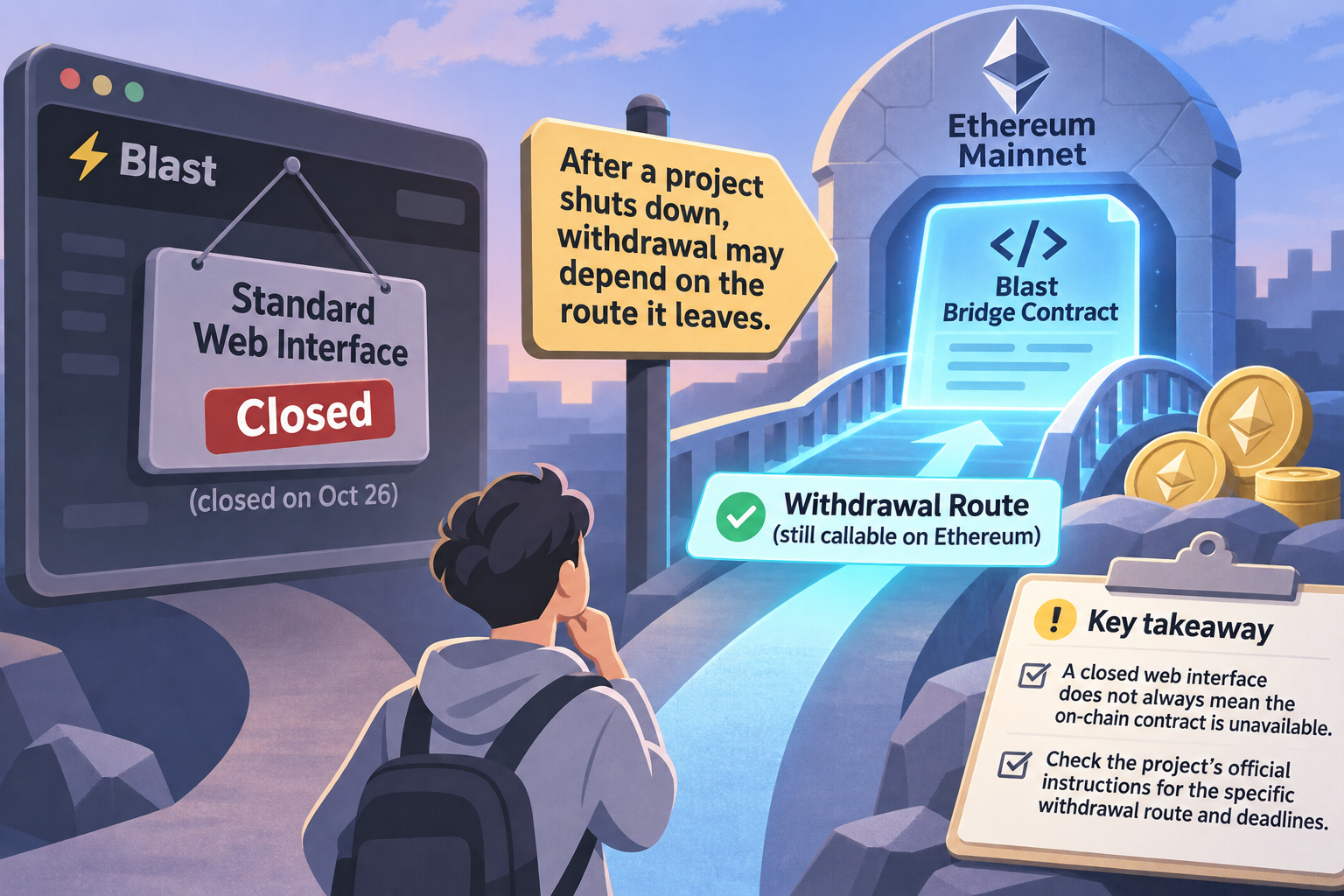
A deadline does not have the same effect in every system. According to the report, after Blast’s standard interface closed on October 26, users could still call its bridge contract on Ethereum mainnet to withdraw. Moonbeam’s migration window offered a different outcome: less than four hours before it closed on July 31, the report said 24.83% of GLMR had passed through the migration contract. Remaining holders faced an email-based, case-by-case review with no guarantee of recovery.
Loopring illustrates a separate trust distinction. Its system had provided a way for users to submit proofs to Ethereum if its operator stopped functioning. The report said its shutdown instead used a coordinated calculation and return of funds—an outcome that depended on the team carrying out that process.
Custody and protocol decisions
For assets left on CoinEx after its cutoff, the report described a transfer of remaining USDT to an independent custodian and a 5% monthly custody fee, calculated against the balance at the deadline. Claims could be submitted by email until August 22, 2028. CoinEx founder Yang Haipo said reserves remained above 100% and announced a CET buyback at 0.005 USDT per token; those were his claims, not independently established figures in the report.
Balancer’s path was a governance decision rather than an Ethereum protocol change. Its BIP-928 shutdown proposal passed with 99.2% support, according to the report. It would allow BAL holders to burn tokens for treasury assets beginning at the end of May 2027, during a six-month window. A separate proposal, BIP-929, seeking continued operation through a fork was rejected. Former CEO Marcus Hardt estimated a redemption value of about $0.158 per BAL, but that calculation was unaudited.
Not every item on the calendar was an approved shutdown. Babylon co-founder Fisher Yu proposed on November 17 that its Bitcoin staking service end before year-end as resources shifted toward Trustless Bitcoin Vaults. The proposal had not been put to a vote at the time of the report. Existing stakers would still be subject to the original unlocking rules and time locks.
For DJED and SHEN, the report said users needed to leave liquidity pools or lending markets before redeeming. It also said SHEN redemptions freeze when the reserve ratio falls below 400%, while an observation in mid-November put that ratio around 340%. The reported threshold makes the redemption rules—not just the year-end service date—material to SHEN holders.
These examples leave different dependencies in place: an exchange’s custody and claims process, a team-managed migration, or a contract withdrawal route that remains usable after an interface closes. The November 24 report did not establish that every announced deadline would unfold exactly as planned; users would need to check the relevant project’s official instructions and avoid anyone asking for a private key or recovery phrase.