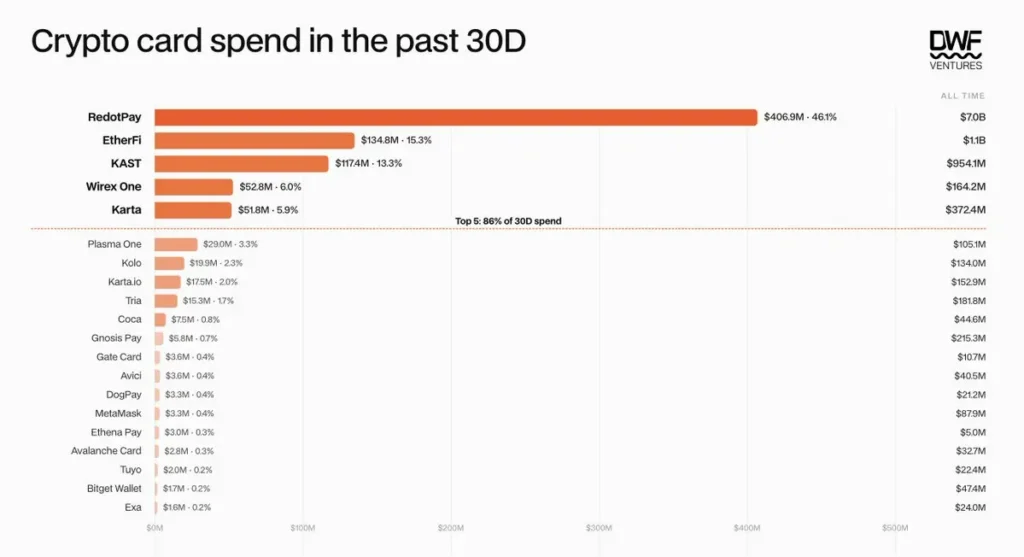
In a November 24, 2026 analysis, DWF Ventures described a fast-growing crypto card market in which spending is concentrated among a few providers. Its broader question was whether stablecoin-based neobanks can build durable businesses beyond card rewards.
Spending growth is concentrated
Weekly crypto card spending exceeded $300 million, up nearly 200% year over year, according to the analysis. Among the 20 largest projects in PaymentScan’s available data, the top five accounted for 86% of spending over the preceding 30 days. RedotPay alone represented more than 46% of volume. DWF Ventures cautioned that metrics for some other card projects were not public.
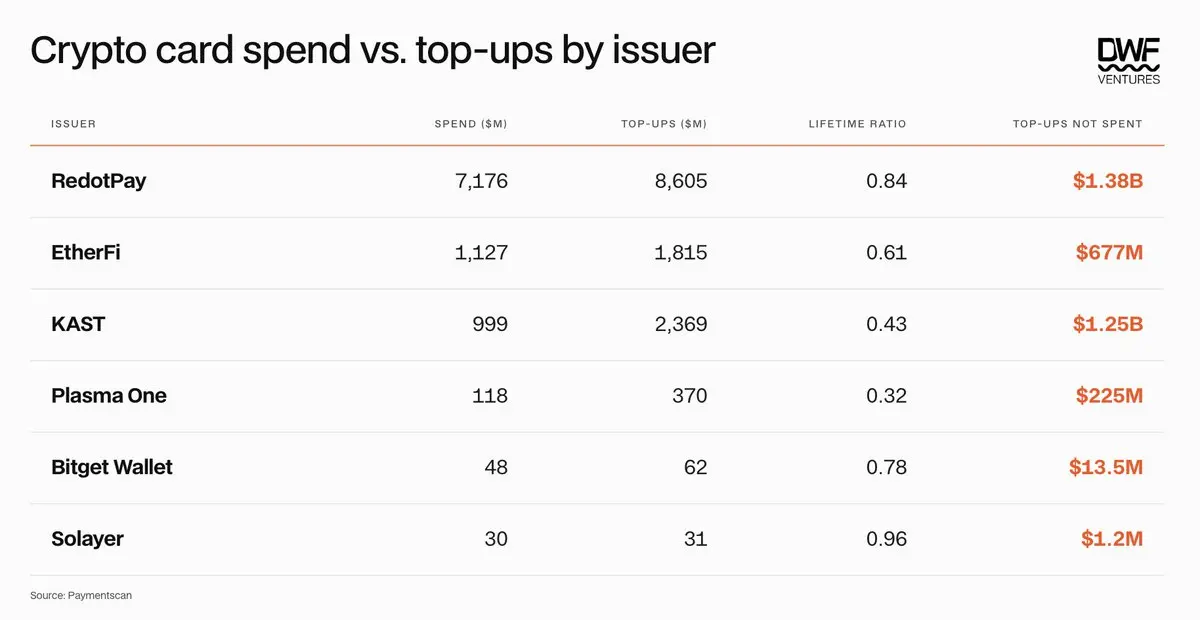
The report also found that users spent only $0.65–$0.75 for every $1 deposited, on average. DWF Ventures interpreted that gap as evidence that customers increasingly use these apps to hold savings as well as to pay. It cited EtherFi and KAST as examples of providers offering 7–9% annual percentage yields on dollar stablecoin deposits.
Rewards complicate card economics
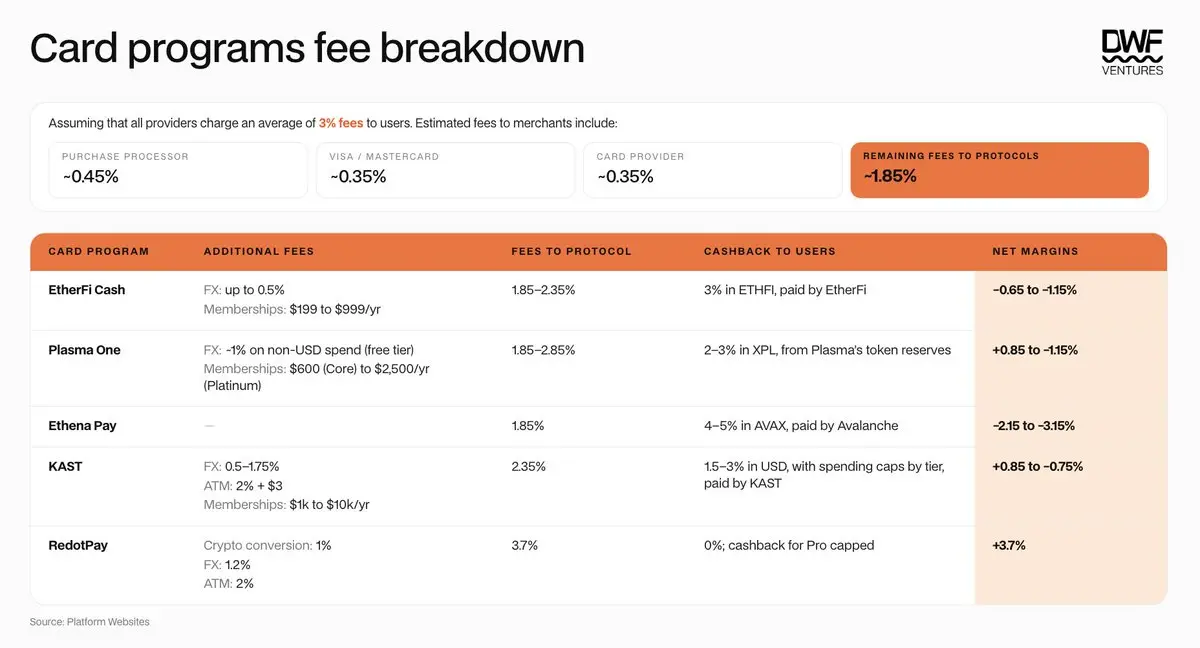
DWF Ventures identified interchange, foreign-exchange and crypto-conversion charges, and fees for converting crypto into local currency as card-program revenue sources. But cashback returns part of that revenue to users. The analysis said that, after cashback, most projects retain less than 1% of card spending in revenue, while reward costs can reach 2–3% per dollar spent. It characterized profitability as uncertain, not established.
The report argued that local payment access may be more defensible than rewards. Most card spending settles in dollars, it said, leaving users spending in other currencies with foreign-exchange fees of 0.5–2%. DWF Ventures pointed to RedotPay’s licensing in Hong Kong, the United States, Canada and Argentina, and its support for payments in more than 35 currencies through local partners, as an example of competing on reach rather than rewards.
What comes after the card
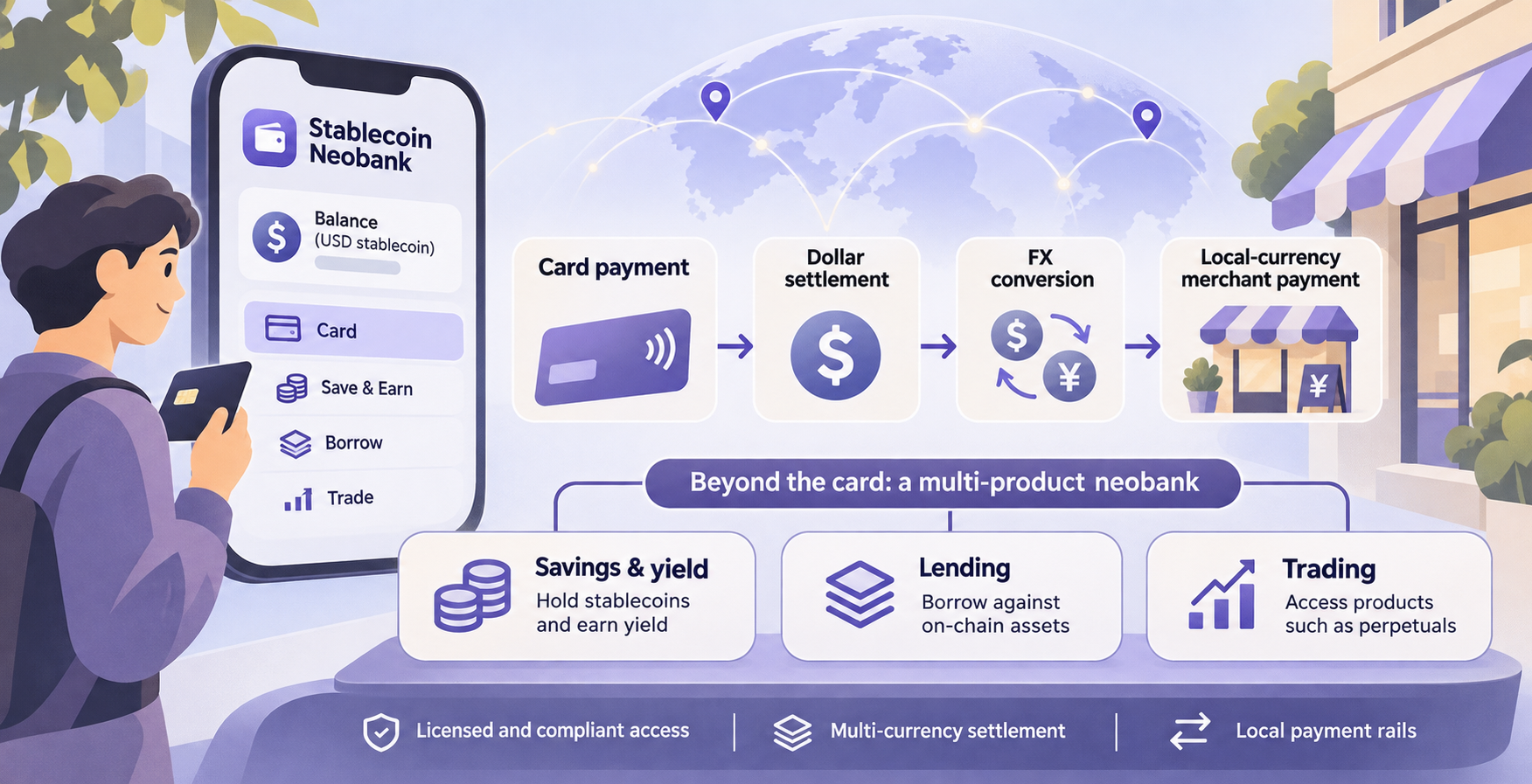
DWF Ventures described several ways providers are experimenting beyond payments. KAST issues a stablecoin through M0, while EtherFi has launched ether.fi USD through Ethena. The report estimated that roughly $48 million in idle EtherFi customer deposits could generate about $2 million annually if they earned a 4% yield; that is a calculation, not reported revenue.
It also cited more than $47 million in loans through ether.fi Cash’s Aave V4 instance, and said Phantom had earned more than $20 million in builder fees from perpetual trading offered in its wallet through Hyperliquid. These are examples of distinct products and revenue models, not evidence that every card provider can reproduce their results.
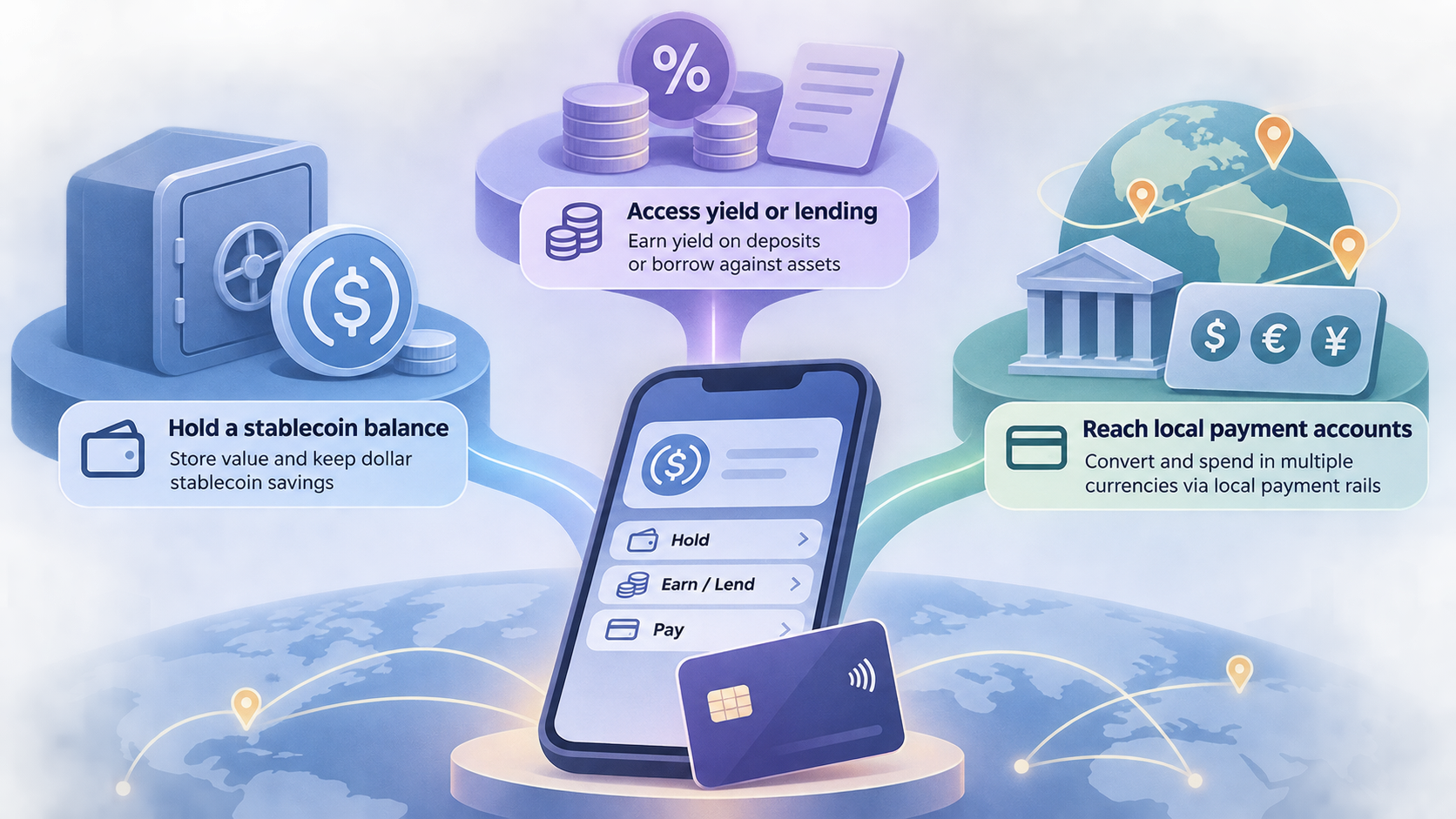
For DWF Ventures, the longer-term test is whether a provider can earn users’ trust to hold funds, offer sustainable yield, and connect stablecoin balances to the local currencies and accounts people actually use. Its case for multi-currency settlement and local payment rails is a competitive outlook, not a change to any Ethereum protocol or an announced network upgrade.