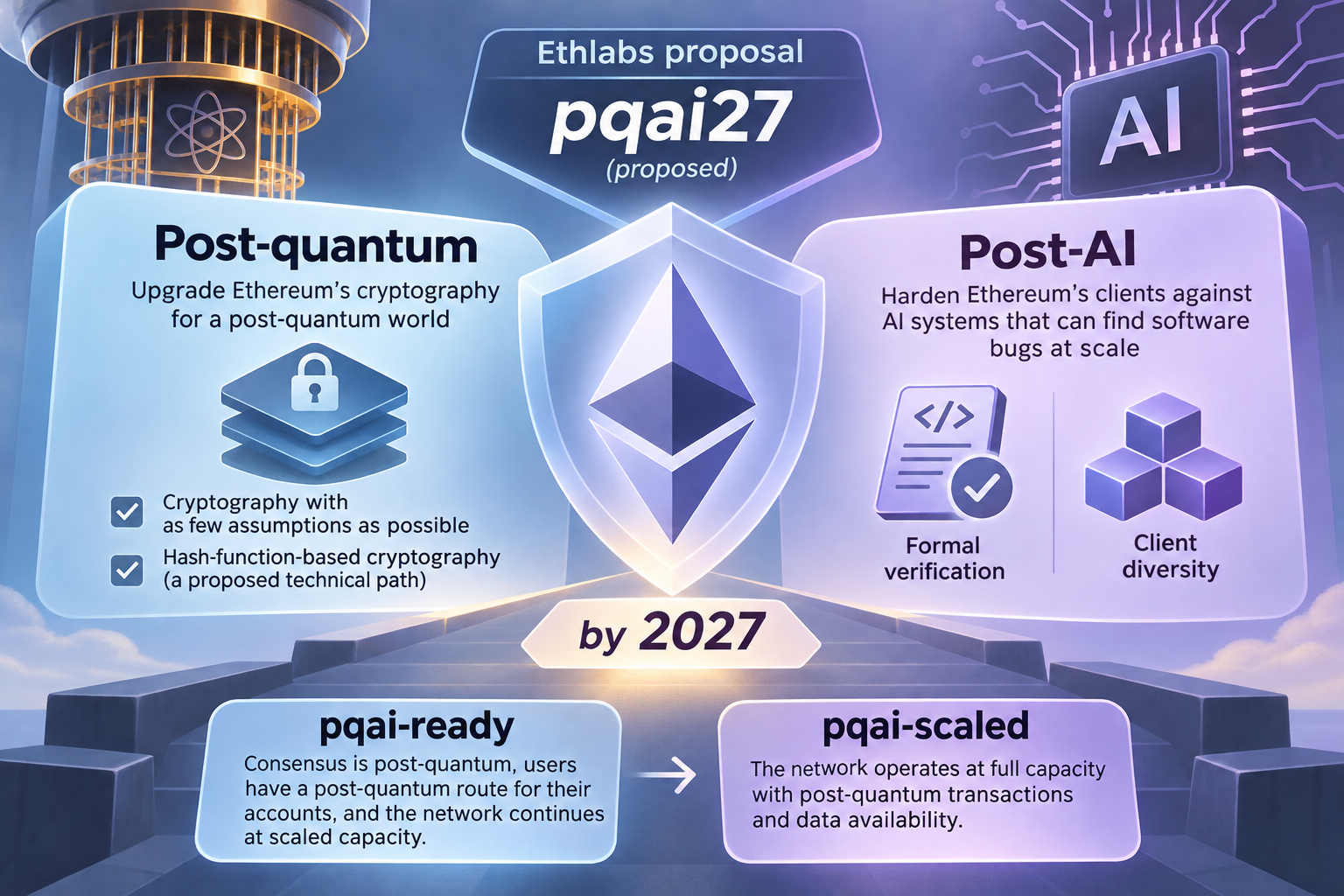
Ethlabs has proposed moving Ethereum’s post-quantum target to 2027, arguing that AI is making the timing of quantum and other cryptographic risks harder to predict. The proposal, which it calls pqai27, is a call to change priorities—not an activated network upgrade.
In a November 12, 2026 report, The Block described Ethlabs’ post on the Ethereum Magicians forum. Ethlabs pointed to what it said were earlier quantum-risk targets from the U.S. government and Google: 2030 and 2029, respectively. The report said the Ethereum Foundation had previously set December 2029 as its target for Ethereum’s full post-quantum readiness.
What Ethlabs wants ready by 2027
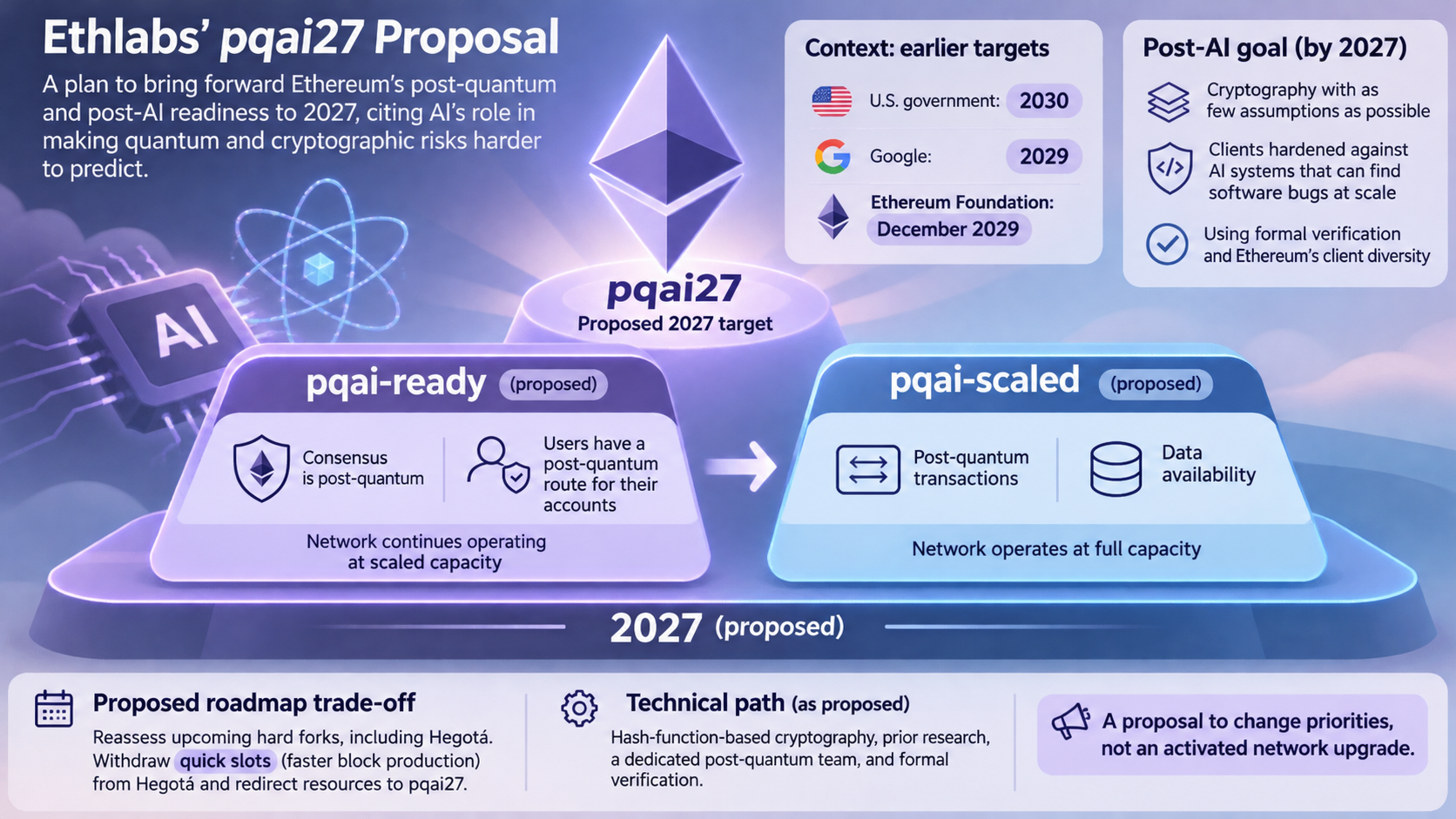
Ethlabs distinguished two milestones. At “pqai-ready,” consensus would be post-quantum, users would have a post-quantum route for their accounts, and the network would continue operating at scaled capacity. At “pqai-scaled,” the network would operate at full capacity with post-quantum transactions and data availability. These are proposed readiness levels, not descriptions of Ethereum’s current state.
The group also wants Ethereum to be “post-AI”: in its terms, to use cryptography resting on as few assumptions as possible and to harden clients against AI systems that can find software bugs at scale. It cited formal verification and Ethereum’s client diversity as part of that approach. Ethlabs argued that research, a dedicated post-quantum team and hash-function-based cryptography provide a technical path, but its 2027 timetable remains a proposal.
The proposed roadmap trade-off
Ethlabs said upcoming hard forks, including Hegotá, should be reassessed against the pqai27 goal. It said it would withdraw quick slots, its proposal for faster block production, from Hegotá and redirect its resources to pqai27. That decision does not establish a new Ethereum fork schedule or mean the proposed post-quantum changes have been adopted.
Ethlabs is a nonprofit Ethereum research and development group founded by former Ethereum Foundation researchers; it launched in 2026.
Source: theblock.co (originally published 2026-11-12 15:26 UTC+8)