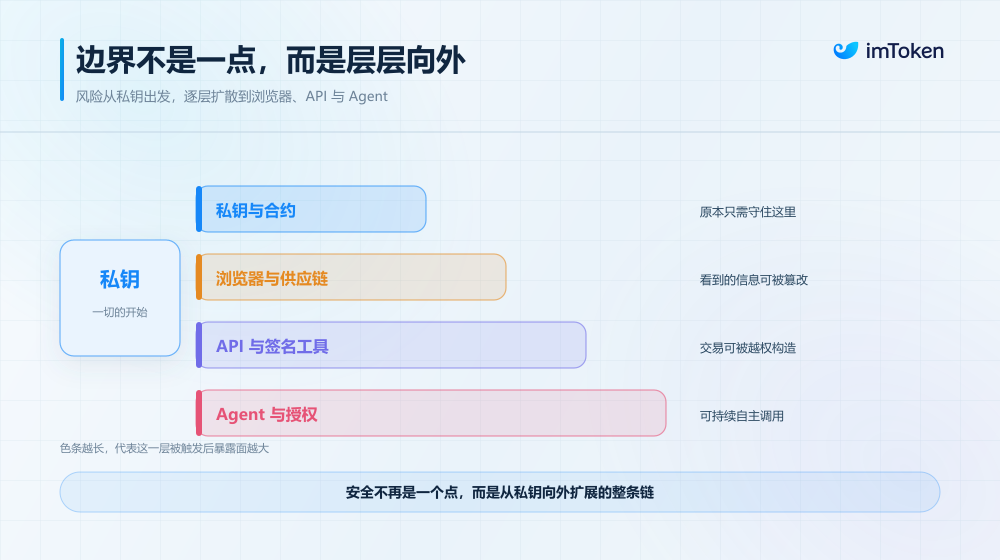
On November 14, 2026, automated trading service HyprEarn reported unauthorized trades in a small number of Hyperliquid accounts whose users had previously authorized its Agent Wallet. HyprEarn asked those users to revoke the old agent’s authorization and reconnect. A Hyperliquid Agent Wallet cannot withdraw funds or transfer them to an external address. It can, however, place trades on a user’s behalf. A trade can cause a loss even when the withdrawal restriction works as intended.
That distinction matters for wallets that support AI agents. Signing one transaction approves a specific action. Authorizing an agent can give it discretion to act for hours or days, changing its actions as prices and positions change. Keeping the user’s private key offline does not, by itself, limit what the agent can do with permission it already holds.
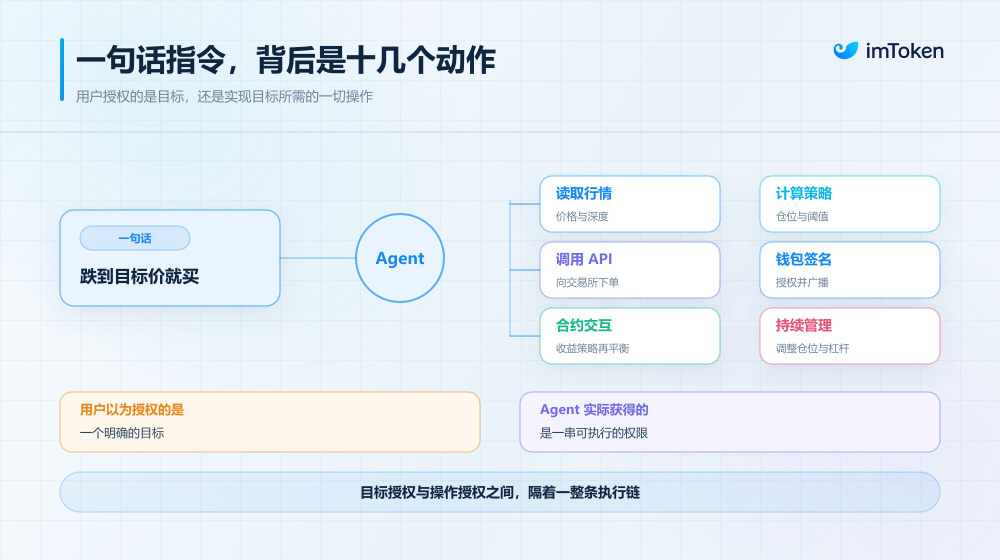
Where control can slip outside the wallet
A November 16 incident at Lighter illustrates the importance of the permissions attached to a trading credential. According to the post-incident disclosure, affected accounts used custom signing software that reused a cryptographic nonce, exposing their API signing keys. The attacker used the accounts’ existing public-pool permissions to move funds into a pool and redeem shares. On-chain activity showed an outflow of about 10.39 million USDC. Lighter suspended withdrawals and the creation of new pools, and its Security Council helped recover about 5 million USDC.
In a separate supply-chain incident involving Optimizely, malicious scripts reached more than 100 corporate websites through the service’s official content delivery network. In users’ browsers, the scripts altered copied cryptocurrency addresses and collected data including payment card details and cookies. The relevant check in this case was not just whether the wallet signed correctly, but whether the address presented for signing was the one the user intended to copy.
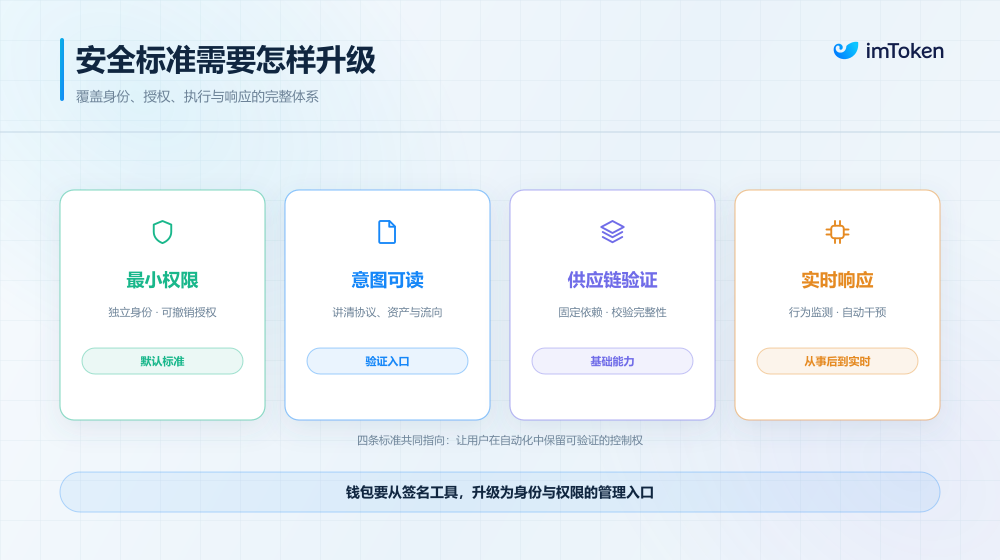
AI agents did not create these weaknesses. What changes is that an agent can connect them in a single task. An instruction to buy ETH on Uniswap at a target price and put the remaining funds into an Aave strategy, for example, requires the agent to read market data, use tools and prepare transactions for signing. A tool that changes a transaction parameter can alter the result even if the agent understood the original instruction. The wallet therefore needs a way to check the actual transaction independently of the model’s account of what it is doing.
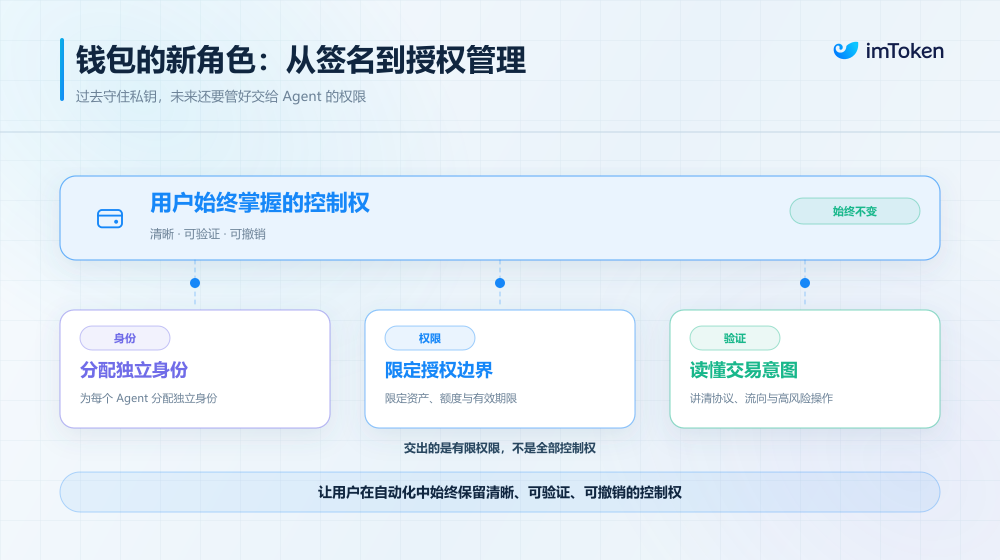
Four design priorities for delegated trading
These are recommendations for wallets, exchanges and agent services, not an adopted protocol standard.
-
Give the agent its own revocable permissions. Define the operations it can perform, the tokens it can use, its per-transaction and cumulative limits, and when its authority expires. A tool or sub-agent should receive no broader permissions than the agent itself. An agent assigned to make recurring ETH purchases, for instance, does not need authority to change leverage. Users should be able to revoke access immediately without waiting for a service provider.
-
Show what the wallet will sign. The wallet should decode the pending transaction locally rather than rely on a description generated by the model. It can then identify the protocol, contract, asset, amount and recipient; flag unlimited approvals or changes in authority; and explain effects on collateral, leverage or positions. Simulation can help show expected balance changes. Large transactions, irreversible actions and permission expansions should retain explicit human confirmation.
-
Check the tools involved in execution. Browser scripts and software libraries are only part of an agent’s supply chain. Skills, Model Context Protocol (MCP) servers, external data feeds and trading APIs can also influence an order. Verifying the origin and integrity of packages, pinning reviewed versions and sandboxing tools can limit that exposure. A tool used to prepare a wallet transaction does not thereby need access to unrelated files or credentials.
-
Detect departures from the task before execution. For an agent assigned to infrequent spot trades, repeated leveraged positions or calls to an unfamiliar contract are more useful warning signs than a withdrawal alert. Platforms can set thresholds for trading frequency, amounts, positions and leverage, then pause the task or reduce its permissions when a threshold is crossed. A record of the instruction, authorization, tool calls, transaction parameters and outcome lets the user trace what happened, but it cannot undo a completed on-chain transaction.
The practical test is whether users can tell what an agent is allowed to do, verify what it is about to do and stop it from acting again. Those controls need to work independently of the model, including when the private key has never left the wallet.