Originally reported by Odaily on November 11, 2026, at 18:26 (UTC+8). Its account of project decisions and network status reflects that reporting date.
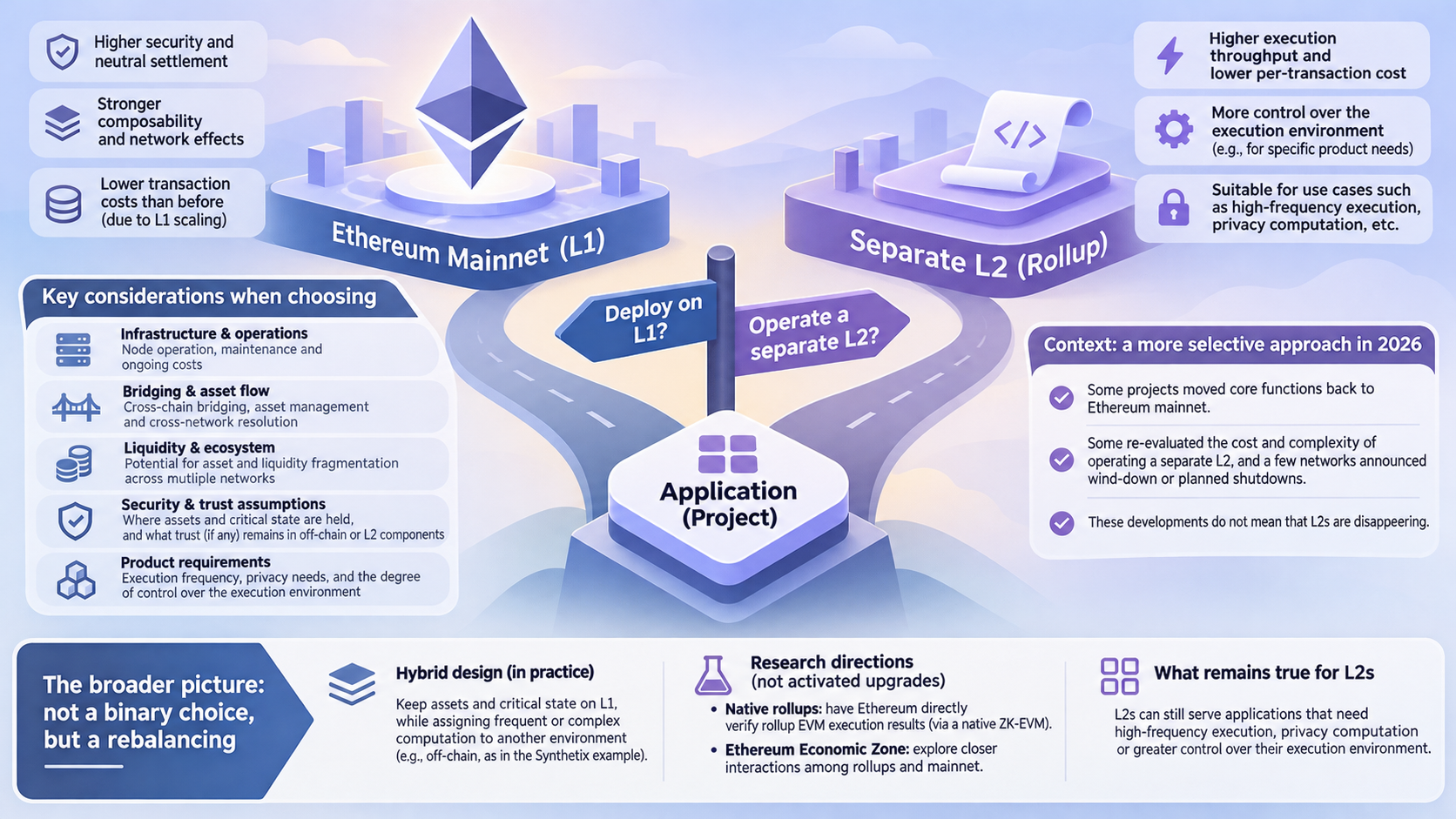
For years, high transaction costs made a dedicated layer 2 (L2) an attractive option for Ethereum applications. Odaily’s November 2026 report describes a more selective approach: some projects were returning core functions to Ethereum mainnet, while others were weighing the cost and complexity of operating a separate network. These examples do not mean that L2s are disappearing.
Projects reassess where to build
ENS Labs planned a ZK rollup called Namechain for ENSv2 in 2024. In February 2026, ENS co-founder Nick Johnson said development of Namechain would stop and ENSv2 would instead deploy on Ethereum mainnet. His stated reason was that mainnet had scaled faster than expected. According to figures disclosed by ENS Labs and cited in the report, the average gas cost of an ENS name registration had fallen by about 99% over the preceding year, from nearly $5 to less than $0.05. Running a separate L2 would also entail infrastructure, bridging, cross-chain resolution, audits and ongoing operations.
Synthetix made a different architectural choice. After publishing L2s are Dead, Long Live Ethereum in June 2025, it launched its next-generation perpetuals exchange on mainnet that December. The report describes a hybrid design: Ethereum L1 contracts hold user assets, an off-chain central limit order book matches orders, and trades are settled on mainnet in batches. The report also notes that parts of margin management still depend on the off-chain order book; the design does not eliminate every trust question.
Odaily lists other decisions made in 2026: Trueo announced in September that it would move its principal deployment from Base to Ethereum L1; ShapeShift moved its rFOX staking program from Arbitrum to mainnet on October 1; and Superseed stopped its L2 in August, with plans to move core products to mainnet. The report says Nillion launched Blacklight L1 in October and began moving node operations previously run on Nillion L2 to Ethereum mainnet, while planning to phase out the L2. The report does not explain how that stated destination relates to Blacklight L1.
Operating costs were also a concern for some networks. The report says Blast announced on October 2 that it would wind down because network maintenance costs exceeded L2 revenue and it saw no reliable path to economic sustainability. It says Abstract subsequently announced a planned December 15 shutdown, despite having more than 144 applications and over 400,000 users; the report cites limited liquidity, a small DeFi ecosystem and insufficient institutional participation. The December closure was a plan, not a completed event as of publication.
What changes—and what remains research
The report frames these choices partly as a response to fragmented assets and liquidity across networks. As of November 2026, it says ETHBEAT tracked dozens of L2s but only a single-digit number had reached Stage 2, with negligible assets at that stage. It identifies Base, Arbitrum One and OP Mainnet as Stage 1. These are reported status assessments, not a claim that all L2s offer the same guarantees as Ethereum mainnet.
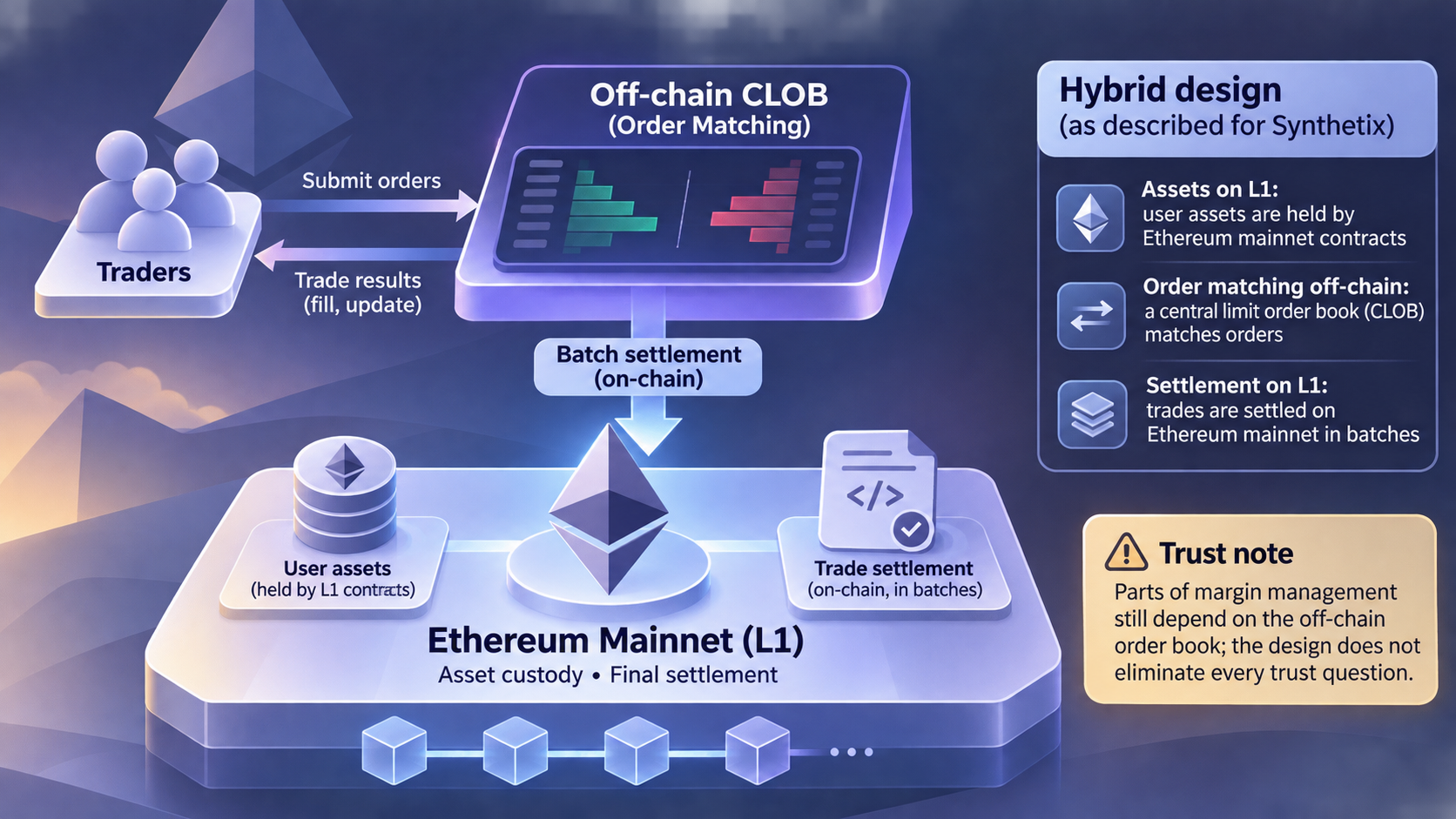
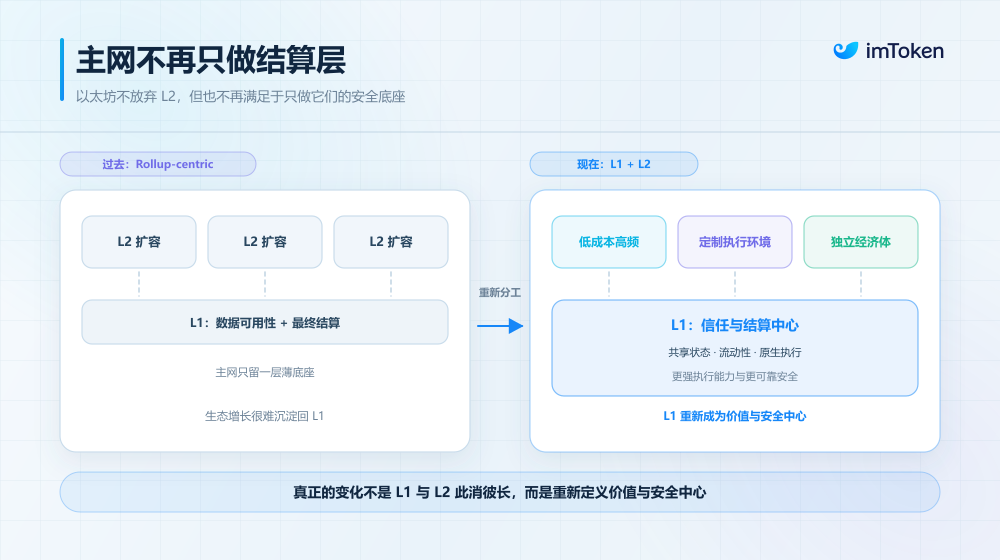
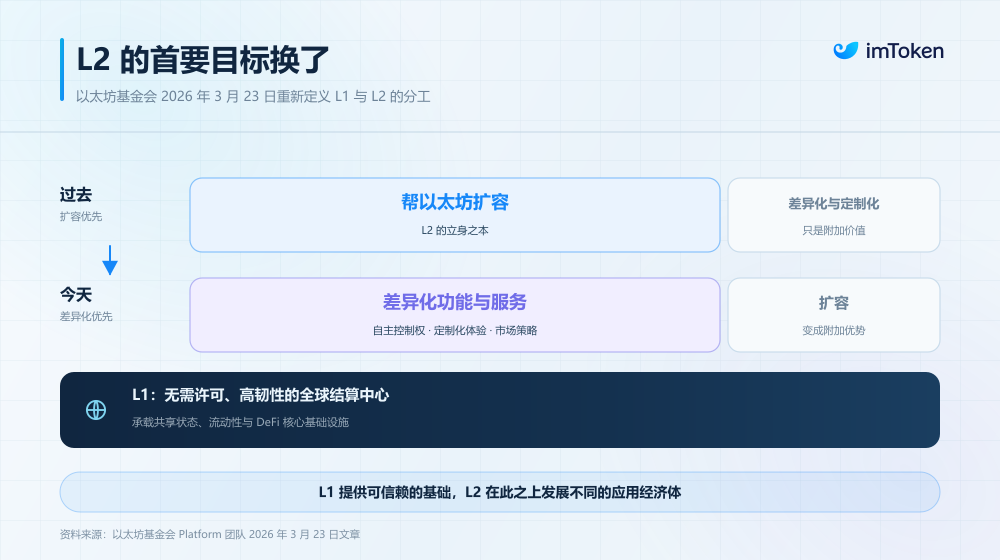
One approach is to keep assets and critical state on L1 while assigning frequent or complex computation to another environment, as in the Synthetix example. The report also discusses native rollups—research into having Ethereum directly verify rollup EVM execution results through a native ZK-EVM mechanism—and Ethereum Economic Zone proposals for closer interactions among rollups and mainnet. It describes these as work at different stages of research and validation, not activated Ethereum upgrades. L2s could still serve applications needing high-frequency execution, privacy computation or greater control over their execution environment.
The question for ETH
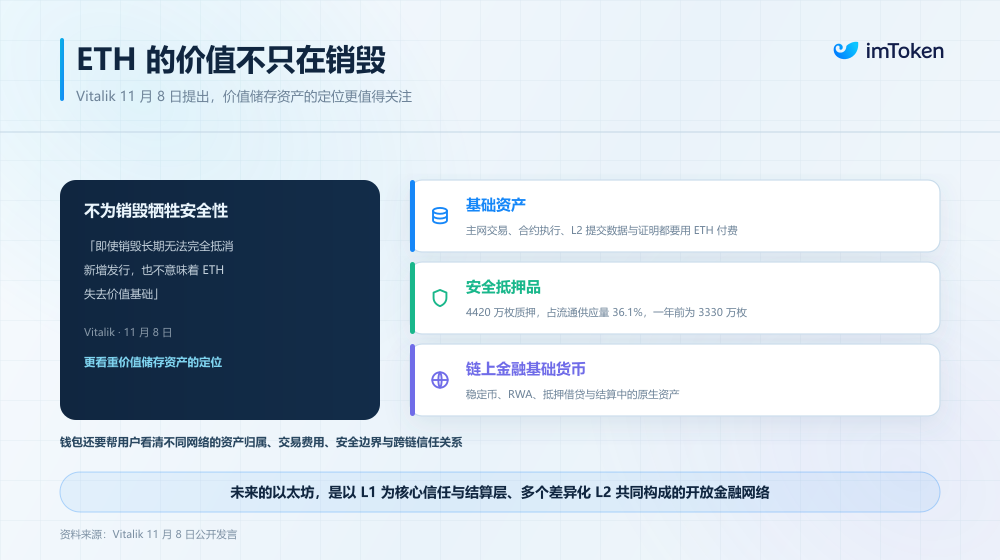
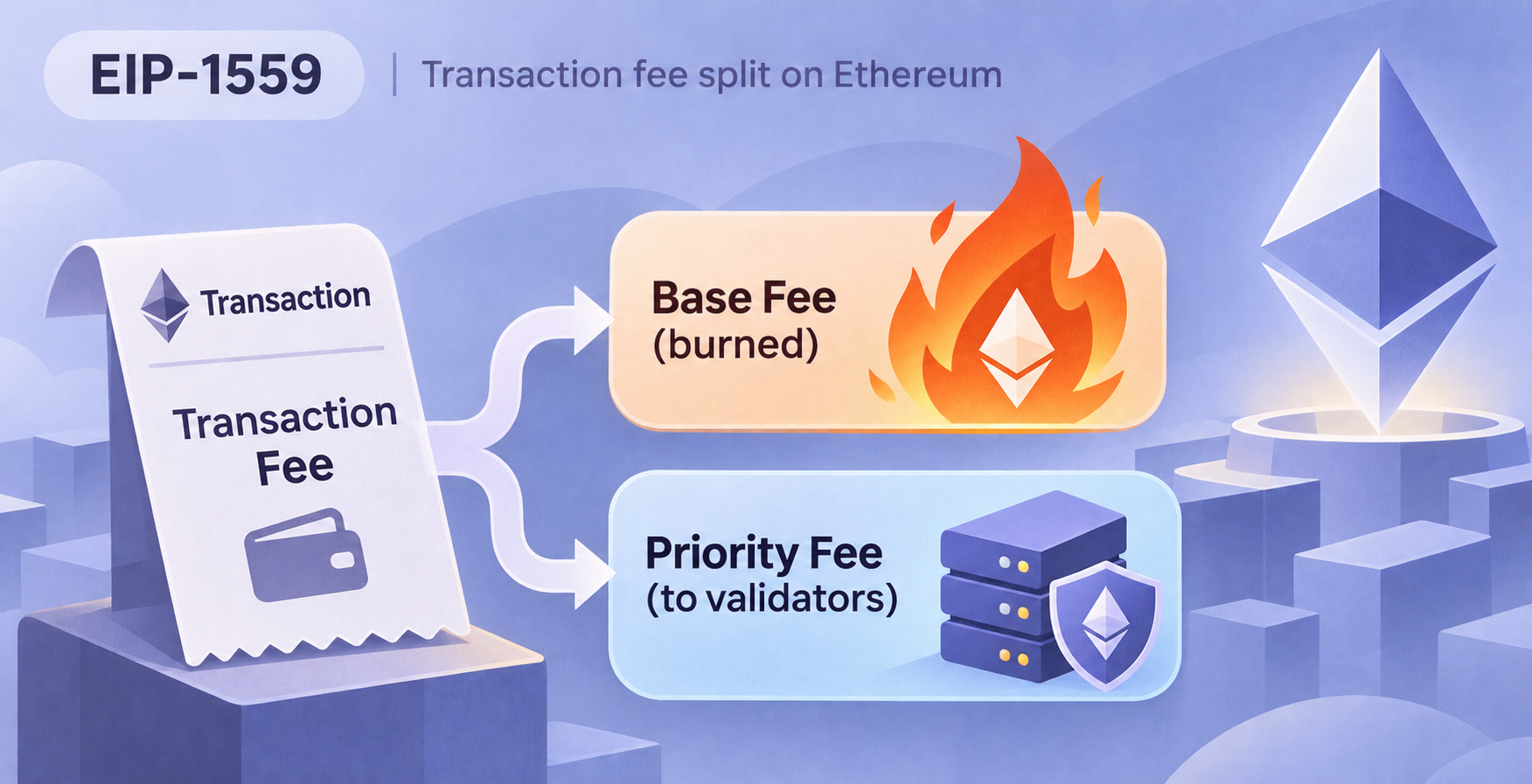
The report argues that cheaper transactions complicate a value narrative focused solely on fee burning. Under EIP-1559, the base fee is burned and the priority fee goes to validators. Lower data-posting costs for L2s and greater mainnet capacity can reduce the fee paid per transaction; more activity therefore does not necessarily produce proportionally more ETH burned.
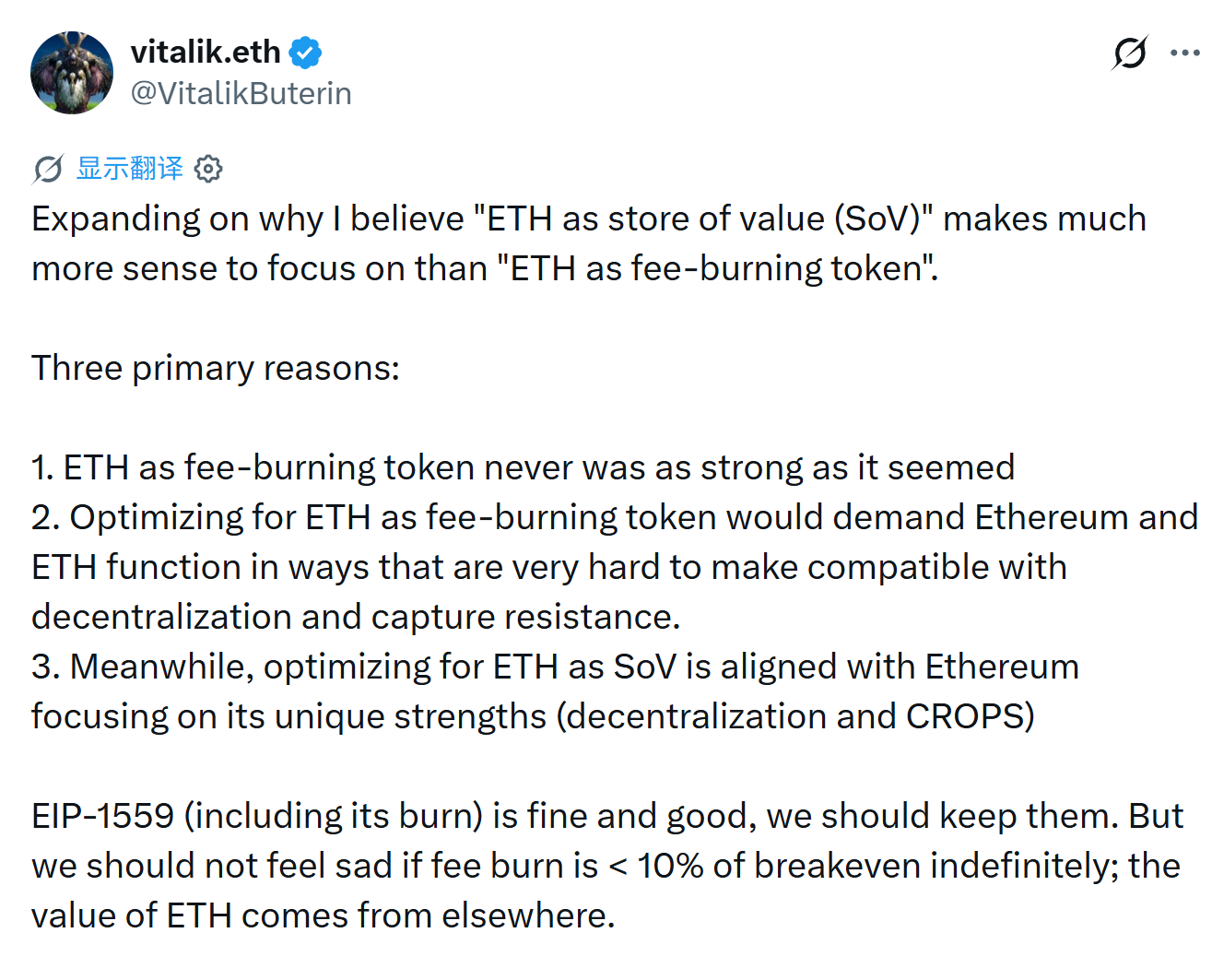
As presented by the report, Vitalik Buterin’s position is not to remove EIP-1559 or its burn. Rather, he argues that ETH’s longer-term case should not depend chiefly on high fees. He points to Ethereum’s decentralization and what he calls CROPS—censorship and capture resistance, open source, privacy and security—as important properties of durable infrastructure. That is an argument about the network’s role, not a prediction of ETH’s price.
The decisions documented here point to a narrower conclusion than an L2 exodus: projects are reconsidering which functions need a separate execution environment, which assets or state should remain on mainnet, and whether maintaining an L2 serves their users. The research directions discussed in the report remain distinct from changes already deployed.
Source: odaily.news (originally published 2026-11-11 18:26 UTC+8)