In an article published on November 21, 2026, wallet provider imToken said it would hold off on broadly introducing EIP-7702 into its products, stop new product-development investment in ERC-4337, and gradually shift its research focus toward native account abstraction. Its stated reason is not that the existing approaches lack value, but that wallet security and long-term maintenance must be weighed against new features.
What the existing approaches change
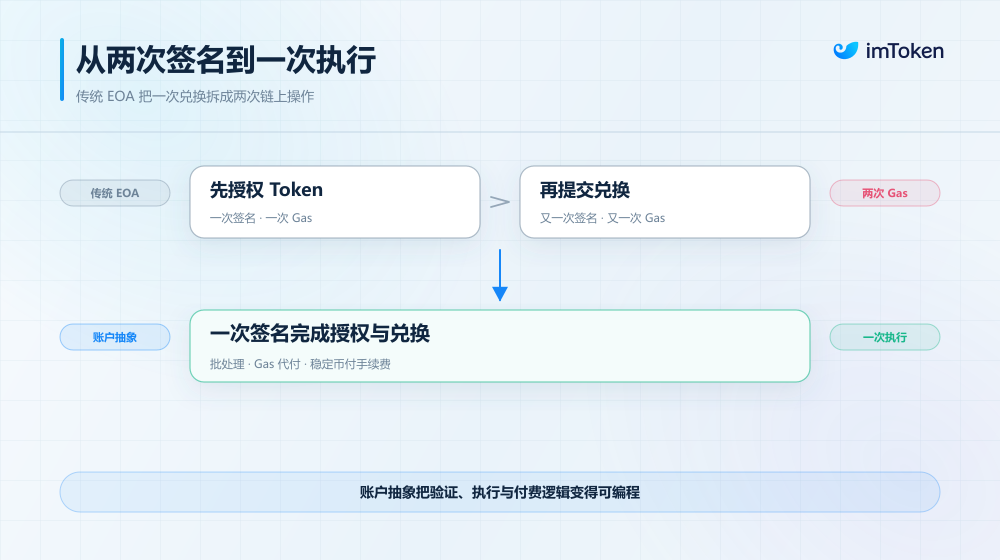
Traditional externally owned accounts (EOAs) are controlled by a private key. Account abstraction aims to make account validation, execution and fee payment more programmable—for example, to support batched actions or third-party payment of transaction fees. imToken argues that these capabilities also make it harder for users to understand precisely what they are authorizing.
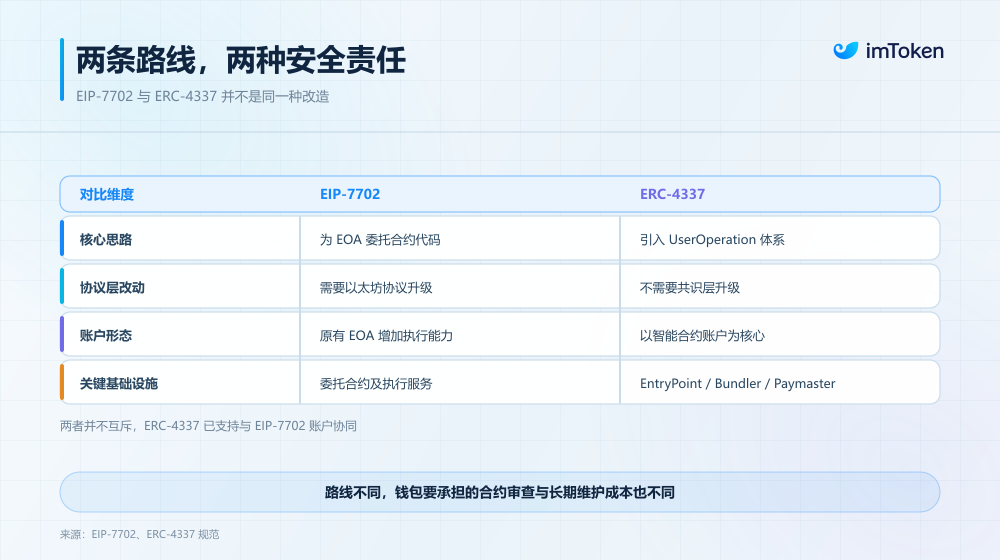
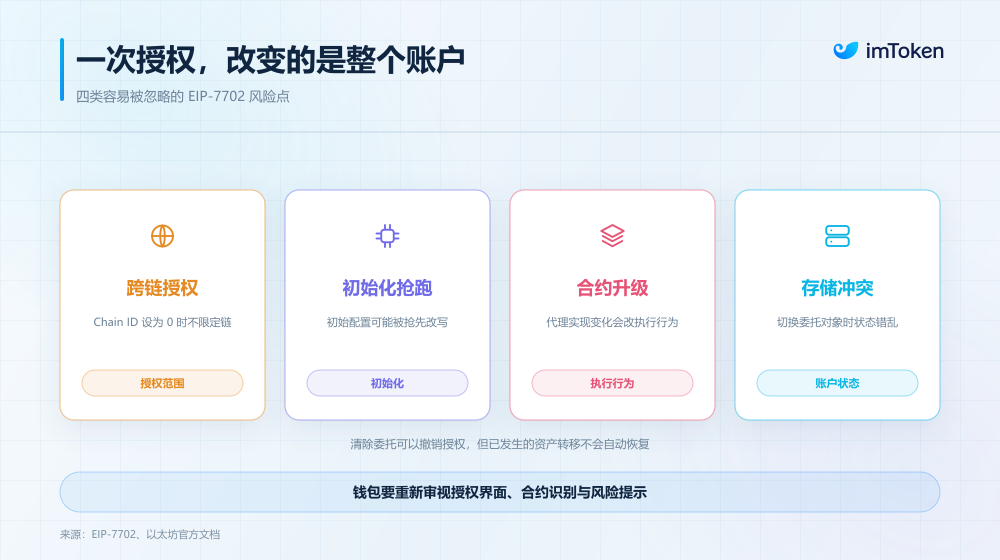
EIP-7702 is already on Ethereum mainnet. It lets an EOA authorize delegation to deployed contract code. That can enable features such as batching, but imToken warns that delegation to malicious or vulnerable code could expose assets and future account operations. The original private key retains control of the EOA; adding multisignature logic through delegation does not, by itself, restrict that key. Delegation can be cleared through a new authorization, but doing so cannot reverse transactions already executed.
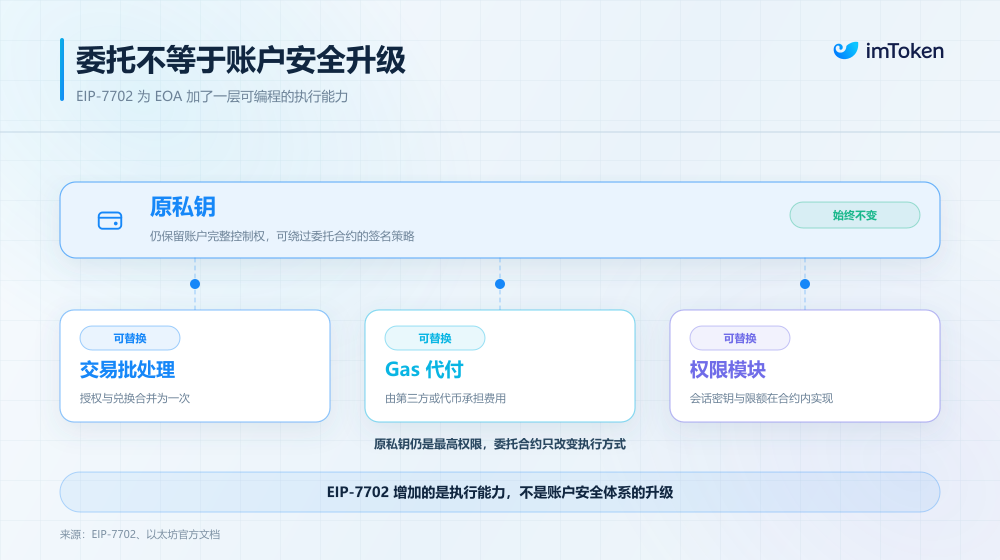
ERC-4337 is a separate, application-layer approach, though imToken notes that it can support EIP-7702. Under ERC-4337, a wallet creates a UserOperation; a Bundler checks it and submits it to an on-chain EntryPoint for validation and execution. A Paymaster may participate when fees are sponsored, while a Factory may be used to create an account. imToken says these components—and differences in account contracts, signature rules and EntryPoint versions—add compatibility, security-review and maintenance work. It also credits ERC-4337 with demonstrating the feasibility of smart accounts in production.
Native AA remains a proposal direction
imToken pointed to the Ethereum Foundation’s February 2026 protocol-priority update, which it said identified native account abstraction as part of its “Improve UX” work. One proposal it highlighted, EIP-8141 (Frame Transactions), explores separating transaction validation, fee-payment authorization and execution into stages.
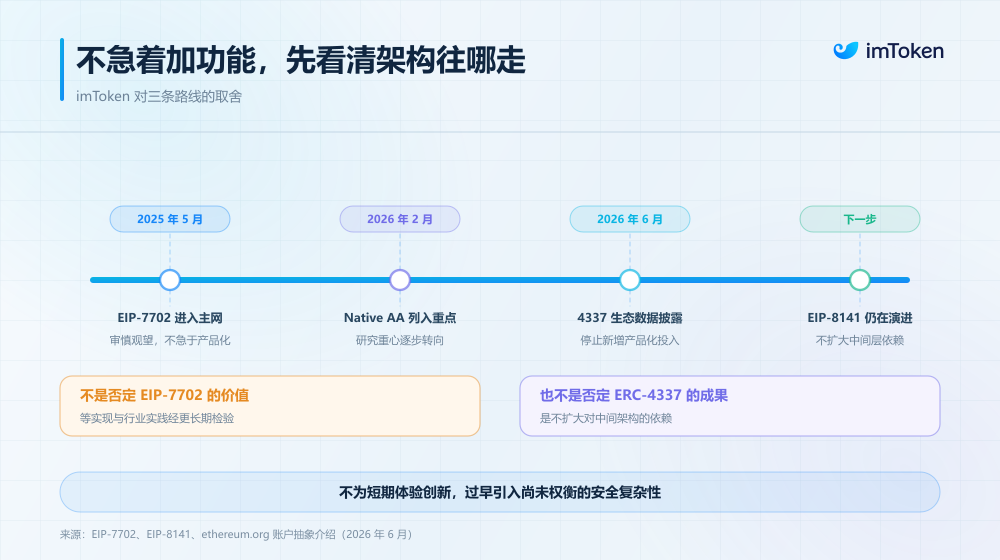
EIP-8141 was still a Draft at the time of imToken’s article—not a deployed upgrade. Native support would not eliminate the need to audit account-validation code or test new fee and validation mechanisms. imToken’s position is to study that longer-term direction while waiting for stronger security practices and clearer user-facing authorization around EIP-7702.