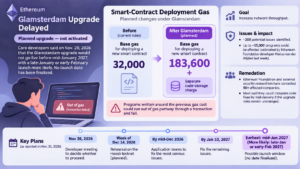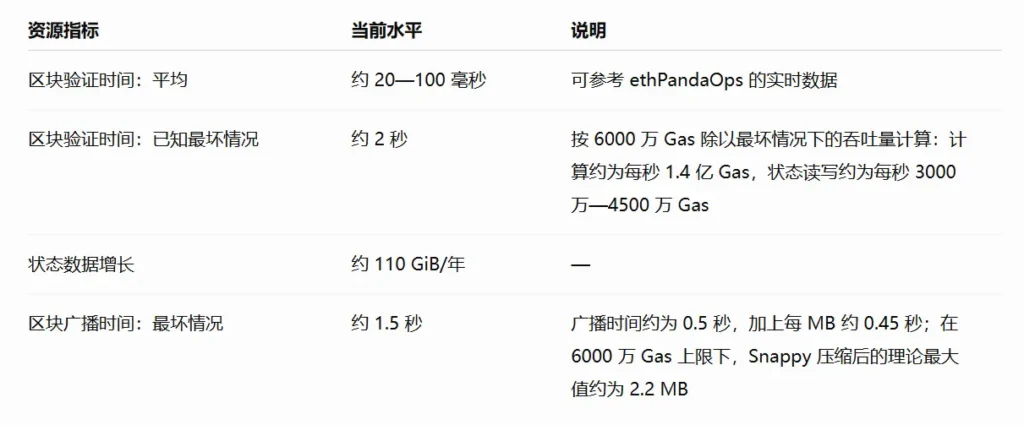
In an article published on November 17, 2026, at 18:00 (UTC+8), Vitalik Buterin argued that Ethereum cannot safely scale every resource at the same rate. His case for EIP-8037, a proposal rather than an activated network change, is that Ethereum could expand transaction execution substantially while restraining the growth of state—the accounts, contract code and storage that nodes must retain.
Why state is the constraint
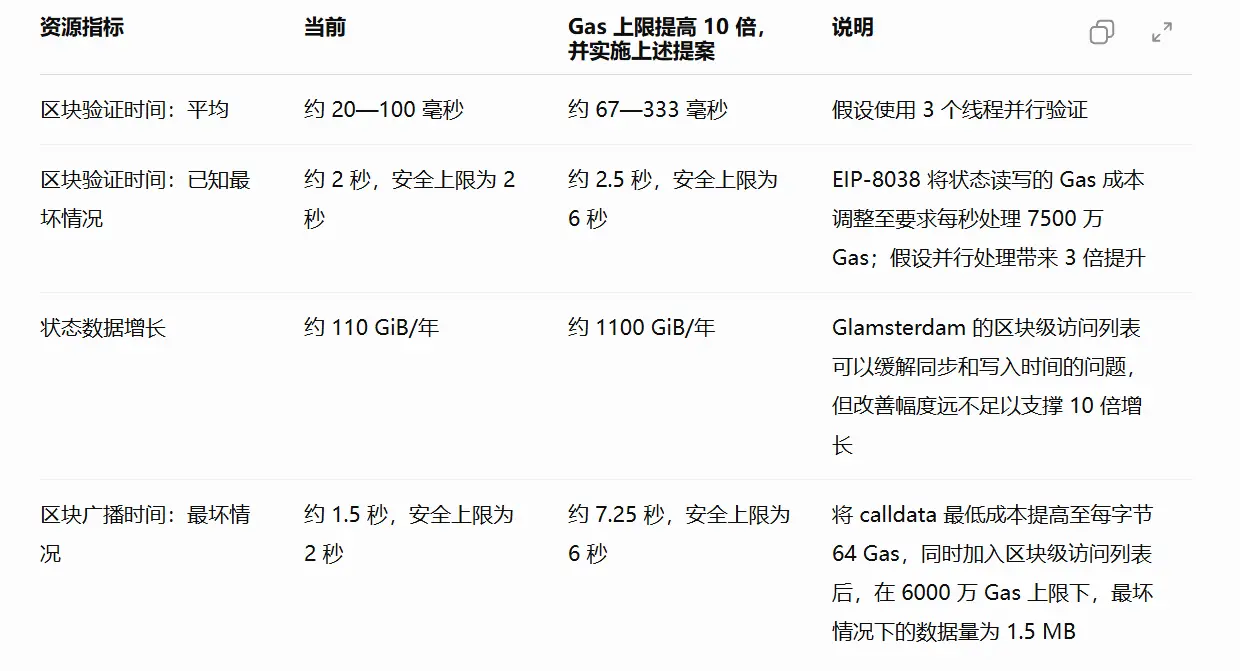
Buterin estimated that if Ethereum raised its gas limit tenfold without EIP-8037, state growth could rise from roughly 110 GiB to 1,100 GiB per year. More state would increase node storage requirements, lengthen initial sync and slow state reads and writes. By contrast, he argued, execution is comparatively easier to scale.
Other proposals discussed for Glamsterdam address different limits: EIP-7976 would raise calldata’s minimum cost to 64 gas per byte; EIP-7928 would use block-level access lists to enable parallel validation; EIP-8038 would raise state read and write costs; and EIP-7732, or ePBS, would allow more time for safe block validation through pipelining. These are proposed changes in Buterin’s analysis, not a claim that they have been activated.
What EIP-8037 would change
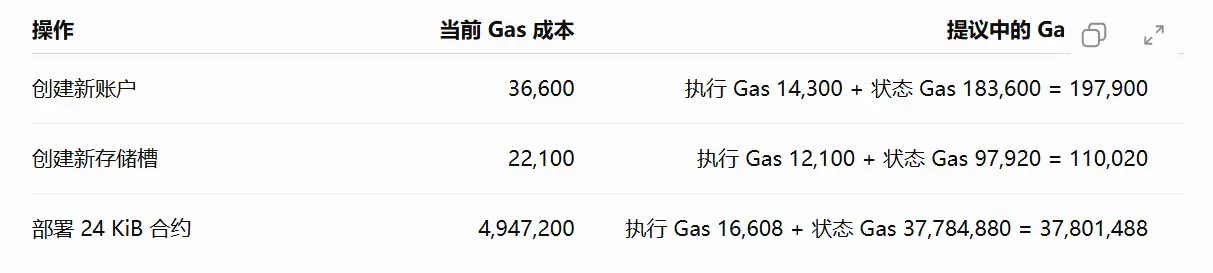
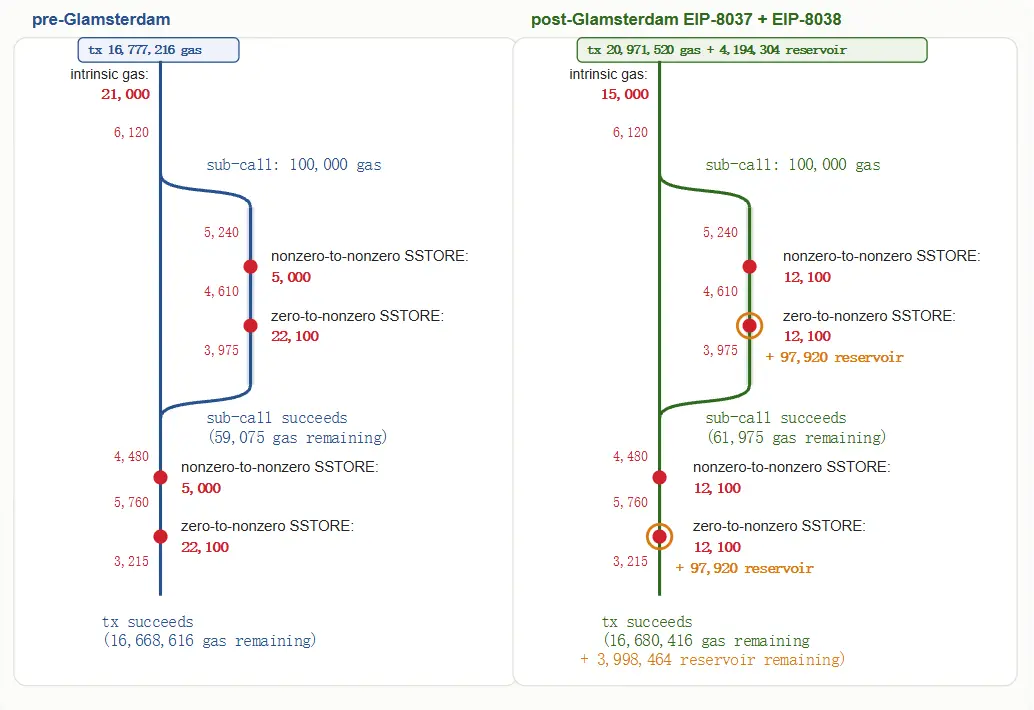
EIP-8037 would charge more to create storage slots, contract code and accounts. Buterin described a proposed state-gas reserve: state creation would draw from that reserve first, using execution gas only after the reserve was exhausted. The design aims to let transactions pay for substantial state creation without making every execution path bear the full cost.
The proposal would also charge for account creation regardless of how it occurs. Buterin gave 183,600 state gas as the proposed cost of creating a new account, including through an ETH transfer. Its initial CPSB pricing parameter would be 1,530, with further increases contemplated as the gas limit rises.
Buterin said EIP-8141, a separate frame-transaction proposal, could eventually let users specify execution and state-gas limits more explicitly. He did not present that feature as part of an already deployed upgrade.
Compatibility remains unresolved
A reserve would not protect every application. Buterin pointed to fixed-gas calls, configurations that are difficult to upgrade and cases where a transaction might omit the optional reserve. As one potential failure mode, he described an OP Stack bridge mechanism with a hard-coded 40,000-gas limit: an attacker might trigger a user-withdrawal operation without a reserve, causing a call to fail while the system records the operation as complete. This was a risk identified in his analysis, not a report of a confirmed exploit.
He also noted that EIP-8038 would raise SSTORE costs from 5,000 to 12,100 gas without a corresponding reserve. Other proposed mitigations—including changing refund timing, adding another reserve or exempting older contracts—carry development costs or compatibility risks of their own. Buterin said simply starting EIP-8037 with gentler parameters would not resolve the OP Stack bridge concern because its gas margin is narrow.
According to Buterin, most core developers at the time favored working with application developers to identify and fix affected applications before Glamsterdam. He said the upgrade had already been delayed, public discussions had taken place and work to identify issues had begun. That describes the position and work reported in November 2026; it does not establish that every affected application was fixed.
For developers of immutable contracts, Buterin’s broader warning was not to assume gas prices or gas mechanisms will remain unchanged. He called for core developers to publish clearer lists of protocol features expected to change—and those considered unlikely to change—so application developers can plan around explicit expectations rather than unwritten ones.