
In reporting published November 17, 2026, tests of the proposed Glamsterdam upgrade raised a compatibility concern: a transaction could succeed on Sepolia even when an internal payment failed. The finding concerns proposed execution-cost changes, not an activated mainnet upgrade.
According to Juicebox technical documentation cited in the report, simulations of its payment contracts exposed three outcomes:
- In an NFT purchase test, the buyer received the NFT although an internal payment to an associated project ran out of gas. The unpaid funds remained in the payment project.
- In a token distribution test, reserved-token allocation completed but a cross-project payment did not. The beneficiary received the project’s original tokens instead of the intended cross-project payment result.
- In a redemption test, transactions using 679,622–817,622 gas completed while the internal payment of a 2.5% protocol fee failed.
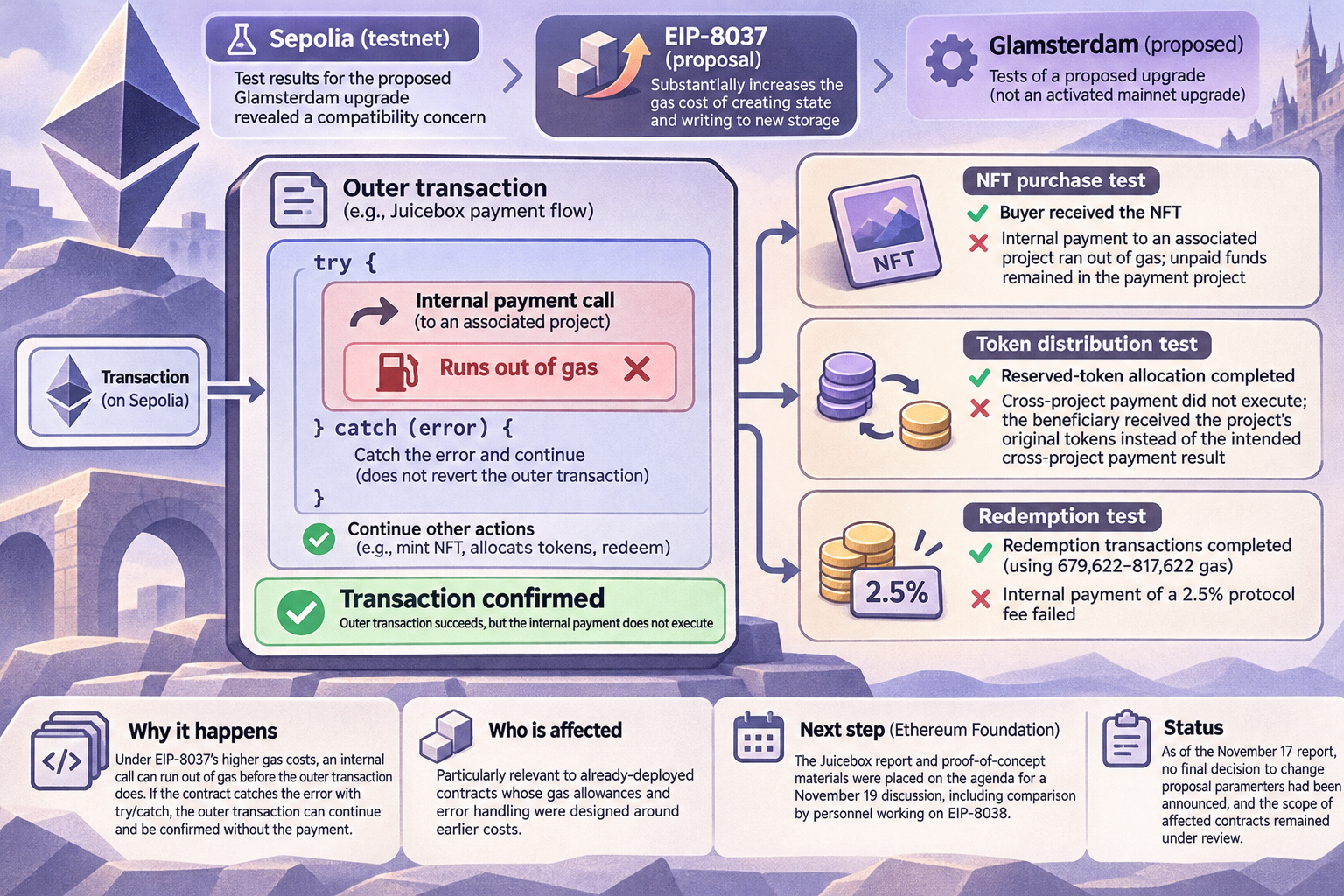
Juicebox developer mejango linked the behavior to changes in gas costs for operations under EIP-8037, a proposal that would substantially increase the cost of creating state and writing to new storage. An internal call can run out of gas before the outer transaction does. If the contract catches that error with try/catch, the outer transaction can continue and be confirmed without the payment. In comparable mainnet simulations within the same gas range, the developers observed either a complete transaction failure or a completed payment—not an internally skipped payment.
The concern is particularly relevant to already-deployed contracts whose gas allowances and error handling were designed around earlier costs. The Ethereum Foundation had placed the Juicebox report and proof-of-concept materials on the agenda for a November 19 discussion, including comparison by personnel working on EIP-8038. As of the November 17 report, no final decision to change proposal parameters had been announced, and the scope of affected contracts remained under review.