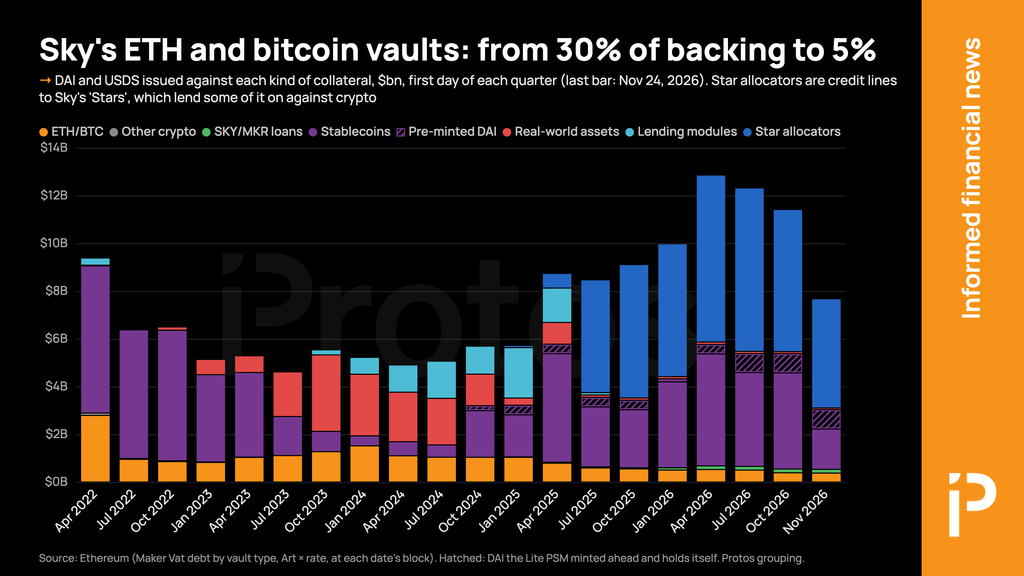
Sky, formerly MakerDAO, stopped new borrowing from several legacy vaults on November 23, 2026, including ETH-backed vaults that had issued DAI. The executive proposal that Sky implemented also completed the retirement of its original USDC Peg Stability Module. BA Labs said repayments were already outpacing new borrowing across the affected vault types, taken together.
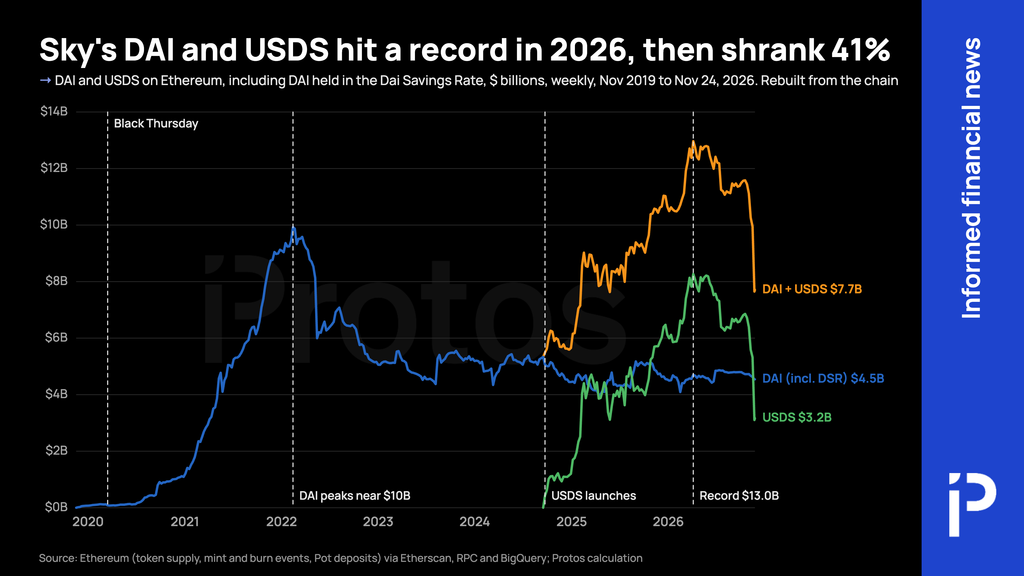
The change closed some routes for issuing DAI; it did not retire the stablecoin. On November 24, DAI supply on Ethereum stood at about $4.5 billion, including DAI held in the Dai Savings Rate. That was more than the $3.2 billion outstanding in USDS, the stablecoin Sky introduced in 2024.
From ETH collateral to a USDC exchange
Maker introduced Sai, short for Simple Dai, in June 2017. Single-collateral Dai went live that December: borrowers could lock up ETH, and only ETH, to issue the stablecoin. Multi-collateral Dai followed in November 2019, allowing MakerDAO governance to approve vaults backed by other assets.
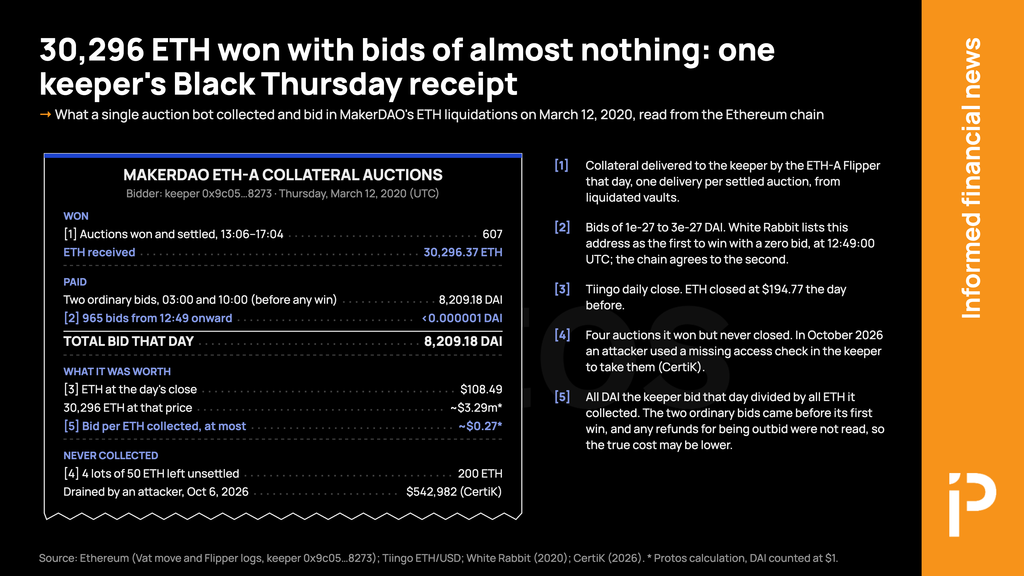
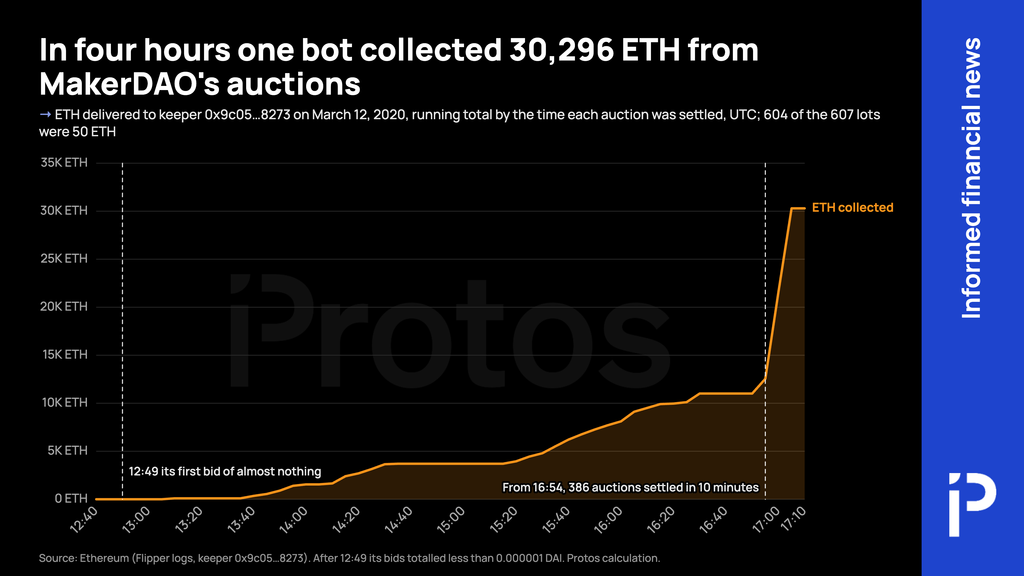
The risks of the ETH vaults became clear on March 12, 2020, known as Black Thursday. ETH fell 44% in a day, triggering liquidations just as Ethereum congestion prevented competing auction bids from getting through. Bidders acquired more than 60,000 ETH in the distressed sales. One automated bidder, known as a keeper, collected 30,296 ETH across 607 settled auctions. Maker had to sell newly issued MKR governance tokens to cover the shortfall. Years later, on October 6, 2026, an attacker took 200 ETH left in four unsettled auction lots from an old keeper contract.
The Peg Stability Module, deployed in December 2020, addressed a different problem: DAI frequently traded several cents away from its $1 target. The module let users exchange DAI and USDC at roughly one for one. In the 395 days before deployment, DAI closed at least a cent away from $1 on 147 days. In the next 2,168 days, it did so just once.
That exception showed the cost of relying on another stablecoin. In March 2023, Silicon Valley Bank closed while holding a substantial portion of USDC issuer Circle’s reserves. USDC fell more than 10 cents below its peg. At the time it accounted for more than half of DAI’s collateral, and DAI closed about three cents below $1 on March 11.
USDS has yet to displace DAI
In 2021, founder Rune Christensen declared MakerDAO “completely decentralized” and said the Maker Foundation would formally dissolve within months. His Endgame Plan the following year proposed smaller governance organizations called MetaDAOs, a larger role for real-world assets and a new governance token. MakerDAO ratified a revised plan in October 2022. The Sky rebrand followed in August 2024, and USDS went live that September.
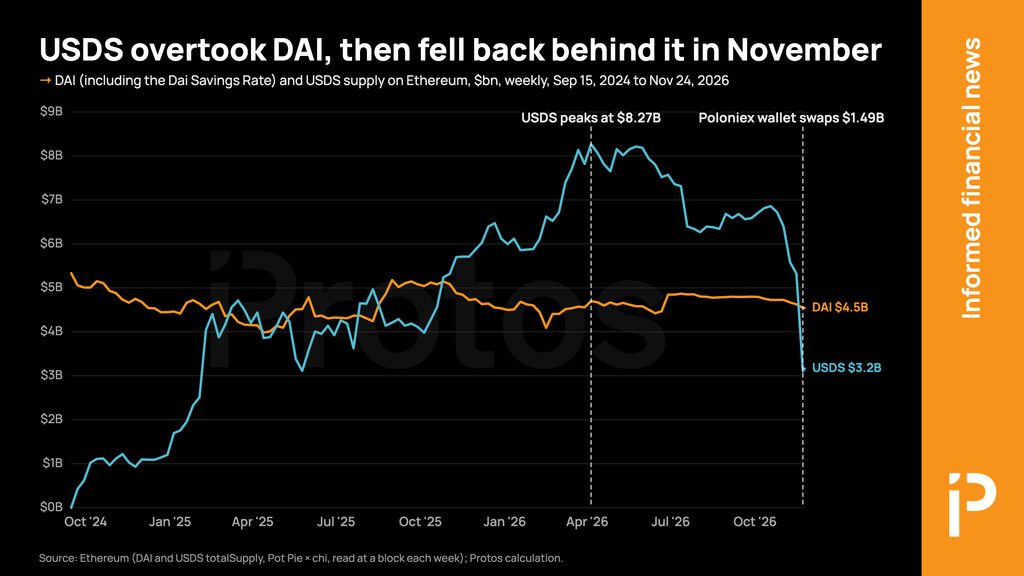
USDS initially overtook DAI. Its Ethereum supply reached about $8.3 billion in April 2026, when the two stablecoins together totaled a record $13 billion. By November 24, the combined supply had fallen 41% to $7.7 billion.
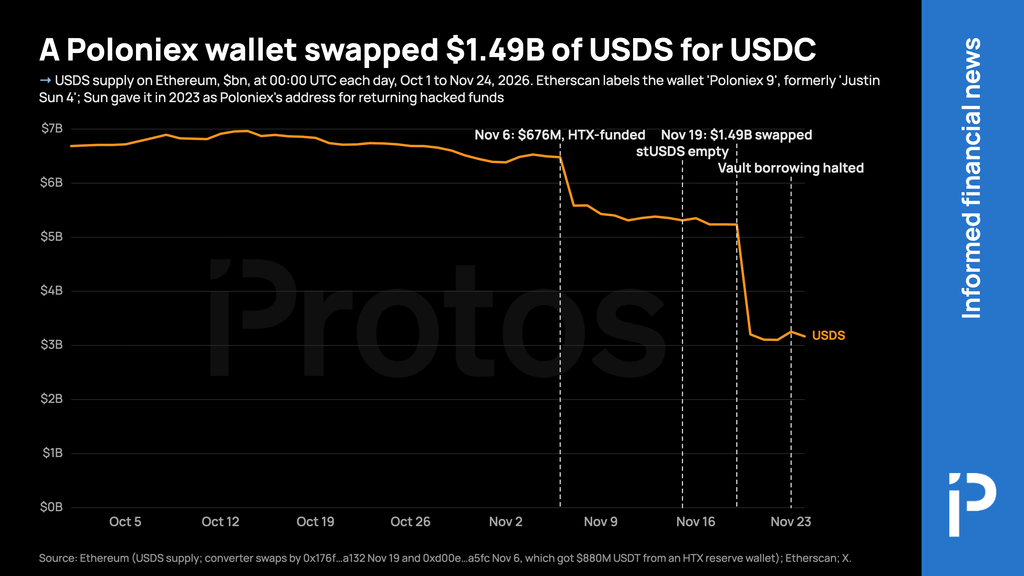
Two November transactions accounted for a substantial part of the USDS decline. On November 6, a wallet that had received hundreds of millions of dollars’ worth of USDT from Justin Sun-owned exchange HTX swapped $676 million in USDS for USDC. On November 19, a wallet labeled “Poloniex 9” by Etherscan, and previously labeled “Justin Sun 4,” swapped $1.49 billion in USDS for USDC. Sun, who owns Poloniex, had identified the latter wallet in 2023 as the exchange’s address for returning hacked funds. Both wallets deposited the USDC into Aave.
Between those swaps, withdrawals from the separate stUSDS market ran dry. Christensen was that market’s largest borrower. By the time Sky halted new borrowing from the legacy vaults, USDS had fallen back behind DAI: the transition in Sky’s lending infrastructure had gone further than the shift in stablecoin supply.