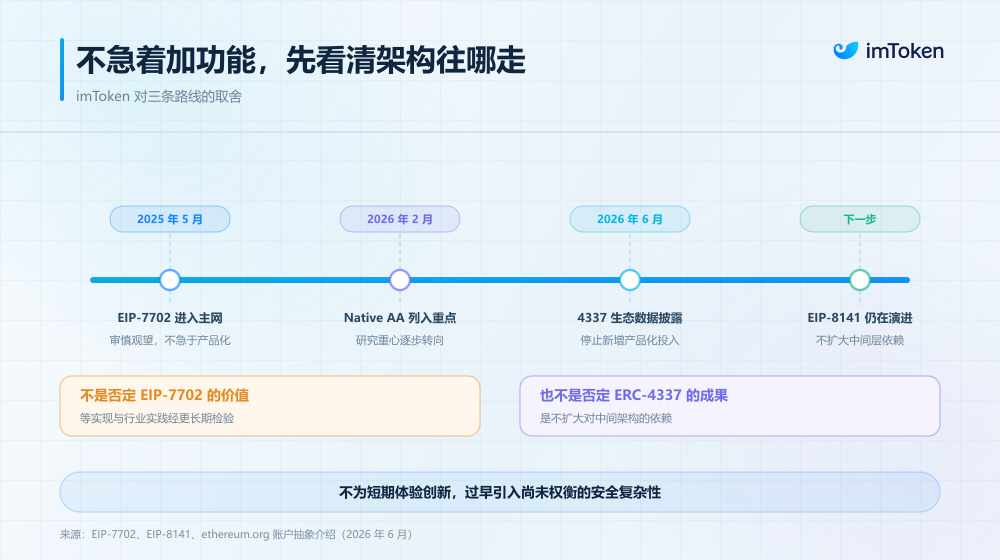
As reported on November 21, 2026, imToken had chosen to remain cautious about broadly introducing EIP-7702 into its wallet, stop new productization investment in ERC-4337, and gradually shift its research focus toward native account abstraction. The distinction matters: EIP-7702 was already on Ethereum mainnet, ERC-4337 provided an application-layer smart-account approach, and the native-AA path discussed in the report was not yet deployed.
What programmable accounts change
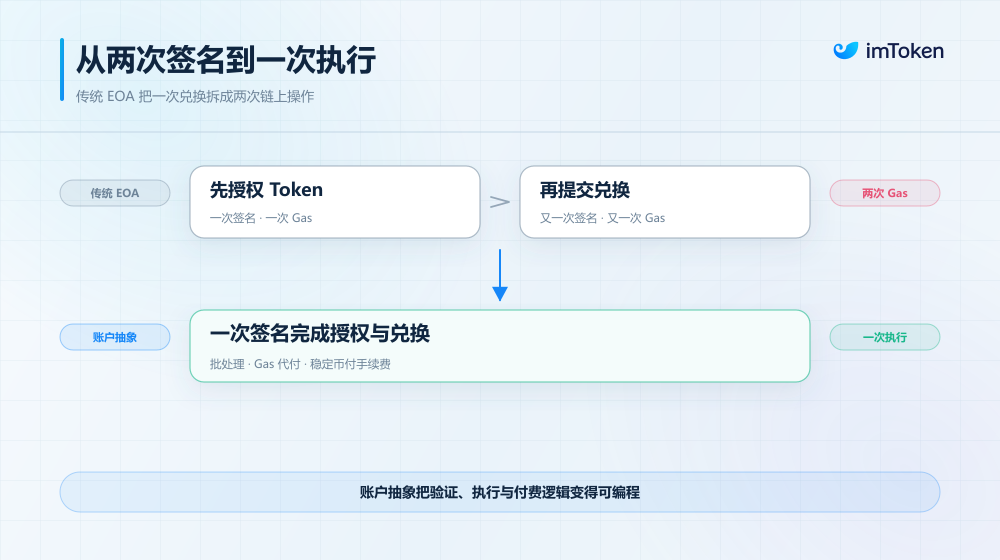
A conventional externally owned account (EOA) is controlled by a private key. Account abstraction aims to make account validation, execution and fee payment more flexible—for example, to support batched actions or transaction fees paid by another party. Those capabilities also make it harder for a wallet to show users the full consequences of an authorization.
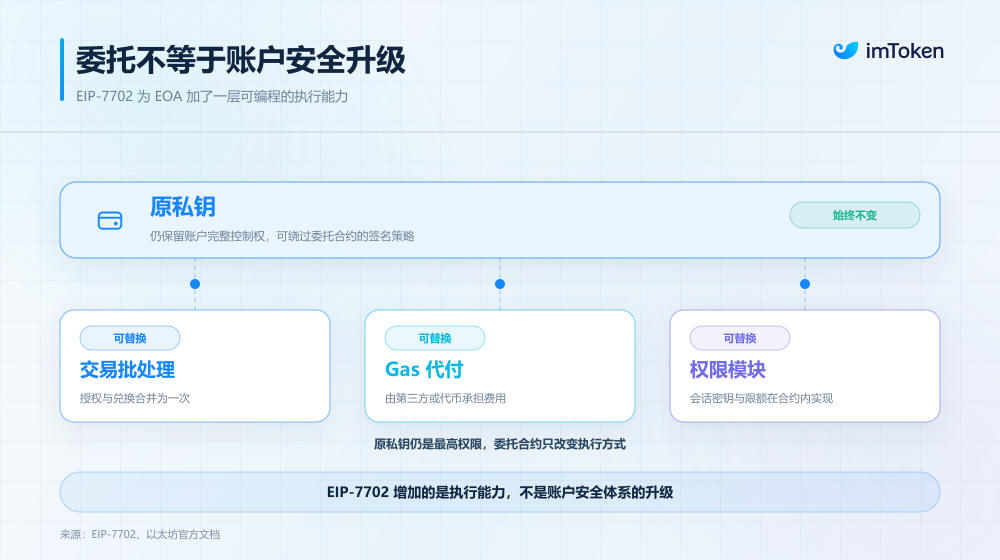
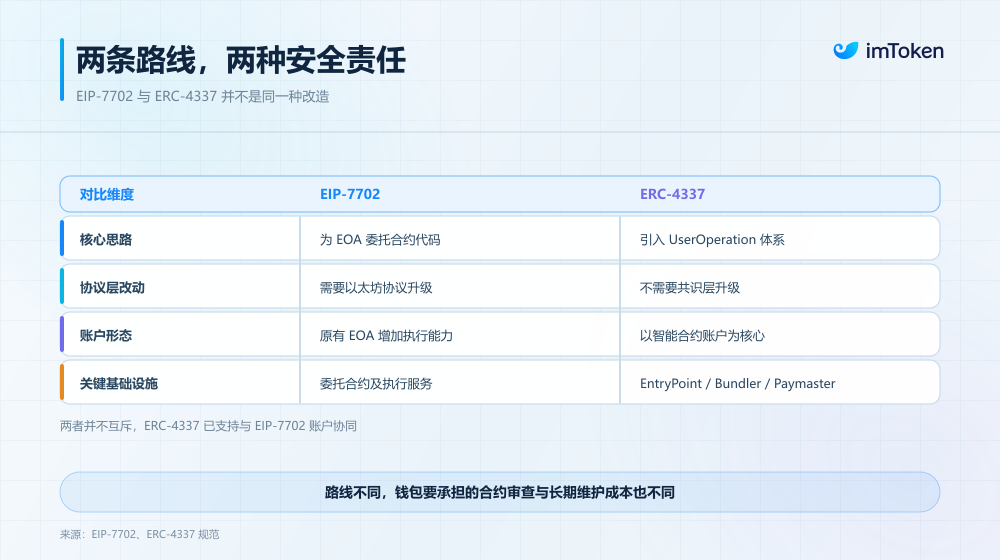
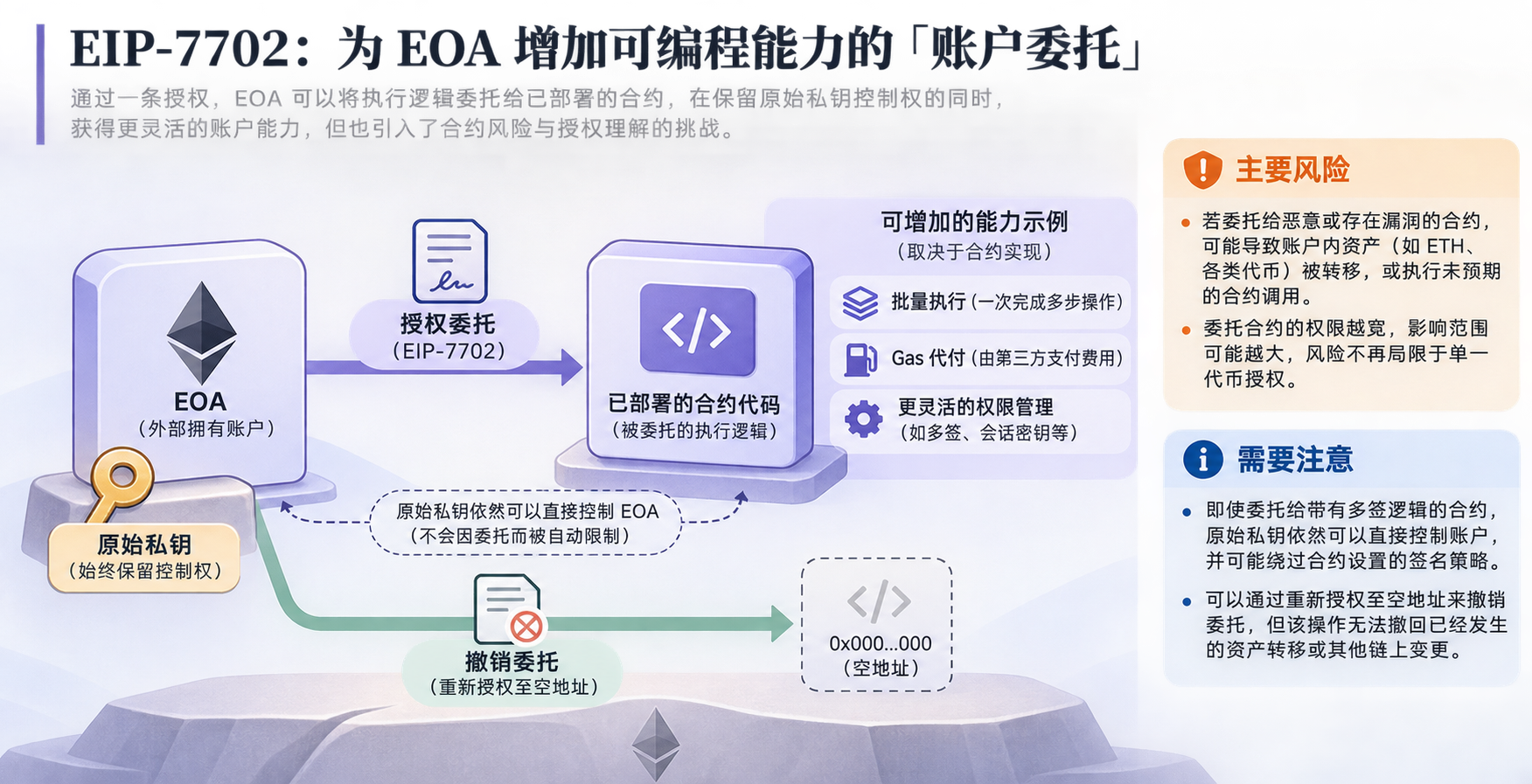
With EIP-7702, an EOA can authorize delegation to deployed contract code. That can add capabilities to an existing account, but the report warns that delegation to malicious or vulnerable code could put assets across the account at risk if that code has broad transfer or call permissions. The original private key retains control of the EOA; adding multisignature logic through delegation does not, by itself, constrain that key. Delegation can be removed through a subsequent authorization to an empty address, but removal cannot undo transfers or other on-chain changes already made.
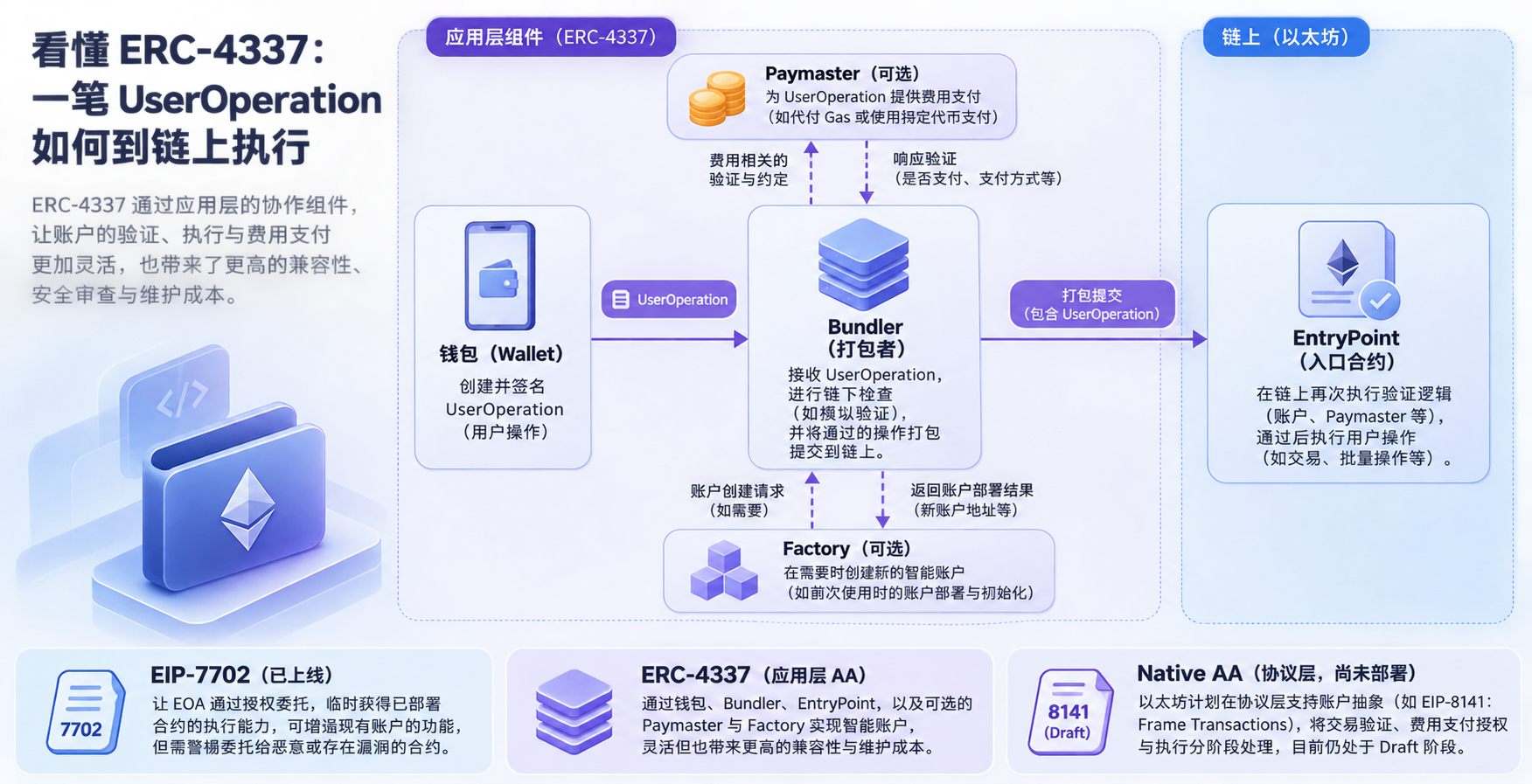
ERC-4337 takes a different, application-layer route. A wallet creates and signs a UserOperation; a Bundler checks it and submits it to an on-chain EntryPoint, which performs validation before execution. A Paymaster may participate in fee payment, while a Factory may be involved in creating an account. According to the report, these components give developers flexibility but add compatibility, security-review and maintenance demands. ERC-4337 and EIP-7702 are not mutually exclusive: the former has added support for compatibility with the latter.
Why imToken is changing emphasis
The report says imToken sees value in EIP-7702’s capabilities but wants more time to assess how users understand delegation and how wallets review contracts, display permissions and handle recovery from problematic authorizations. It also acknowledges ERC-4337’s production experience while questioning the long-term cost of expanding an application-layer system as protocol-level work progresses. Stopping new ERC-4337 productization investment is not the same as saying the standard has been withdrawn or that existing implementations no longer work.
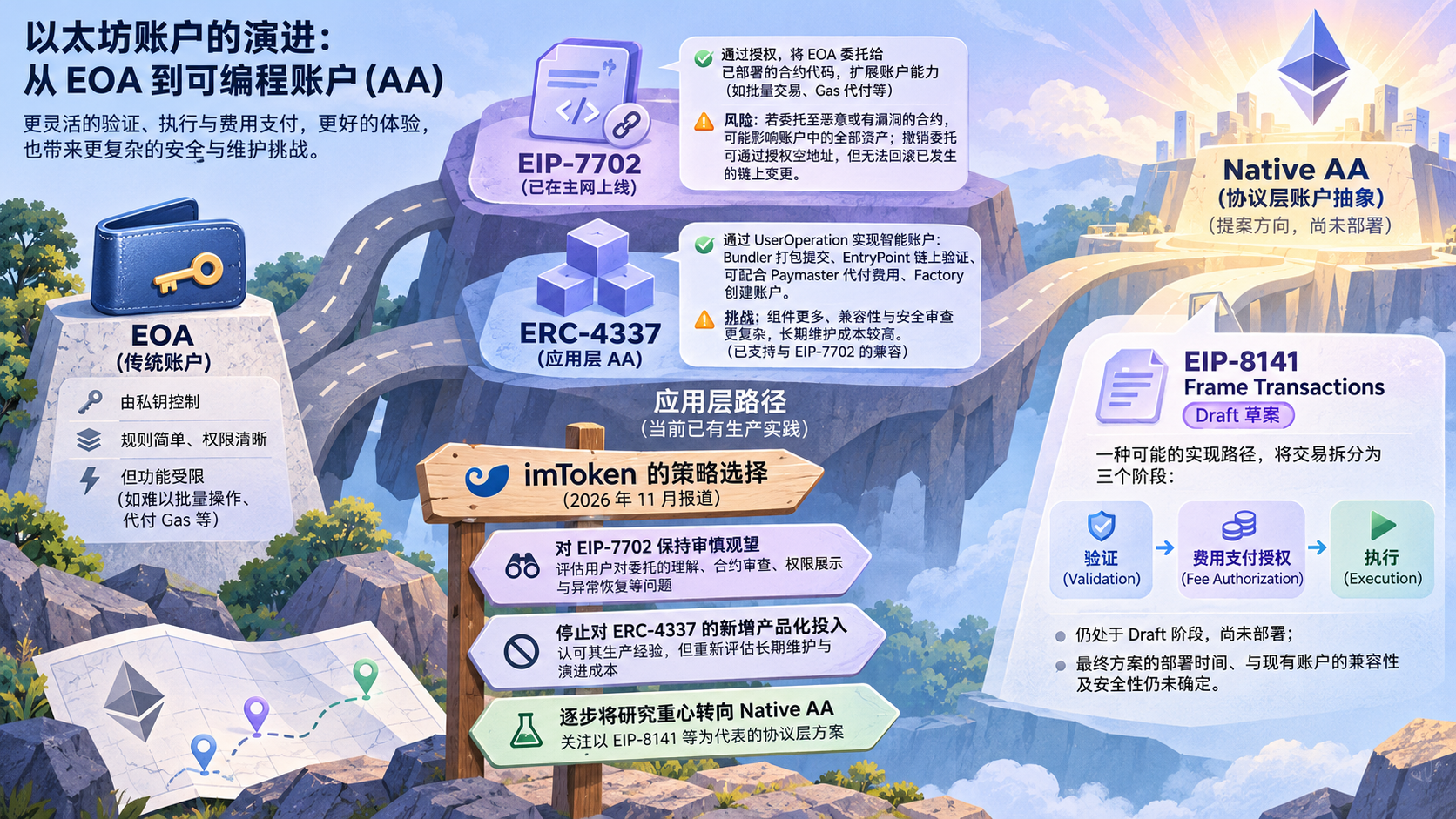
The longer-term direction remains a proposal, not an activated upgrade. The report says the Ethereum Foundation identified native account abstraction as a priority within its “Improve UX” work in February 2026. It points to EIP-8141, Frame Transactions, as one possible route for separating transaction validation, fee-payment authorization and execution into stages. EIP-8141 was still a Draft at the time of the November report. Its eventual deployment, compatibility with existing accounts and security properties remained unresolved; native support would not eliminate the need to audit account-validation code and test new fee mechanisms.